Zinc Deficiency and Nails: What the Signs Actually Mean
Quick Answer: Does Zinc Deficiency Show Up in Your Nails?
Zinc deficiency can show in the nails, but not in the way most online checklists claim. A genuine shortfall tends to slow nail growth and leave the plate thin, soft or brittle with a rough, peeling surface, and in more advanced cases it inflames the skin of the nail folds. The scattered white flecks that get blamed on zinc are almost always old minor trauma. Nails are a suggestive clue, never a diagnosis — only a clinician and a blood test can confirm low zinc.
- Plausible signs: slow growth, thin or brittle plates, rough surface, transverse ridging, sore nail folds.
- Persistent myth: white spots as a zinc meter — they are usually knocks to the matrix.
- What settles it: symptoms plus diet history plus a serum zinc level ordered by a clinician.

What zinc actually does inside a growing nail
Zinc is an essential trace mineral that works as a component of hundreds of enzymes, including the ones that build proteins and copy DNA. That is why nails are among the first places a shortfall shows: the nail matrix at the base of each nail is one of the fastest-dividing tissues in the body, and any tissue running at that pace is sensitive to a break in its supply of raw materials.
Zinc also maintains the skin barrier and supports normal immune function, which is why a severe deficiency never presents as a nail problem alone. It arrives as a package: a rash around the mouth, hands and groin, slower wound healing, hair shedding, sometimes a blunted sense of taste. If your nails are the only thing that has changed, zinc is a low-probability explanation. Severe deficiency — from acrodermatitis enteropathica, malabsorption or bowel surgery — is uncommon and unmistakable to a clinician, while marginal deficiency is subtle by definition, and a nail cannot tell you which you have.
What zinc deficiency looks like on fingernails
Growth slows first. Fingernails normally advance about three millimetres a month, and when protein synthesis in the matrix is constrained that rate falls. The plate then tends to thin and soften, splitting or peeling in layers at the free edge rather than breaking cleanly, and surface texture goes next: a dull, rough or finely pitted plate, sometimes with ridges running across the nail rather than along it.
Those transverse lines are a timestamp: they mark the period the matrix was disturbed and travel outward with growth, so a ridge halfway up a fingernail records something from two to three months ago, not now. The most useful sign is often not the plate but the skin around it — in significant deficiency the nail folds become red, cracked and sore and hangnails multiply, because zinc is central to barrier repair.
None of this is specific to zinc. Iron shortfall, thyroid disease, chemotherapy, psoriasis, aggressive gel manicures, solvent exposure and simple ageing all produce overlapping pictures. That overlap is why a nail sign is a prompt to investigate rather than a conclusion, and it is the same logic we apply in our wider look at which nutrient deficiencies actually track with nail problems.
Do white spots on your nails mean zinc deficiency?
Almost always no, and this is the most persistent piece of misinformation in nail folklore. Those scattered white flecks are punctate leukonychia, and in an otherwise healthy adult they usually follow small mechanical knocks to the matrix — a trapped finger, an over-enthusiastic cuticle push, a nail clipped too aggressively. The injury disturbs how keratin cells mature, air is trapped in the plate, and light scatters off it as a white patch that grows out over the following months.
If you want an honest test, look at the pattern. Mechanical leukonychia is patchy, asymmetric and appears on the fingers you actually knock; nutritional change is diffuse, affects all ten nails and comes with slowed growth. One exception is genuinely medical: broad white bands crossing the whole nail, or nails largely white with a normal band at the tip, can be associated with low albumin or with liver and kidney disease. That belongs in a consulting room.
Where a topical fits while you sort out the inside
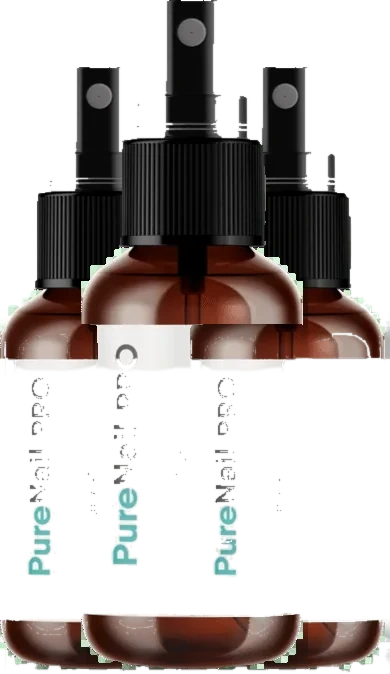
PureNail PRO is a topical botanical spray of tea tree, lavender, aloe and jojoba oils for the look and feel of nails and the skin around them. It is a grooming cosmetic, not a treatment for any deficiency or infection — the official page lists every ingredient and the current pricing.
See the Official PureNail PRO PageAre toenails affected differently from fingernails?
Toenails do register nutrient status, but late and noisily. A fingernail replaces itself in roughly four to six months; a toenail can take twelve to eighteen, and it carries far more confounding damage from footwear, repetitive trauma and the warm damp environment that suits dermatophytes. A thick, yellowing, crumbling toenail is much more likely to be a fungal infection, an old injury or age-related thickening than a mineral shortfall — which is why our guide on what to do about a thick, yellow toenail starts with getting the diagnosis right.
The practical rule: read your fingernails for nutritional clues and your toenails for mechanical and infectious ones.
Does vitamin D deficiency show on your nails?
The evidence for a specific, recognisable vitamin D nail sign is weak. Low vitamin D status has been reported alongside brittle nails in observational work, but reported alongside is not the same as causes, and there is no distinctive change a dermatologist could look at and call a vitamin D nail.
In practice, vitamin D deficiency is diagnosed by a blood test for 25-hydroxyvitamin D, not by inspecting a nail. Correcting a confirmed deficiency is worthwhile for reasons that have nothing to do with nails, and any improvement in nail quality that follows is a side effect of fixing a real problem. We look at that evidence in our review of what the clinical studies on vitamins and nail fungus actually measured.
Nail signs and their likely causes, side by side
| What you see | Most likely explanation | What would actually confirm it |
|---|---|---|
| Scattered white flecks | Minor trauma to the matrix weeks ago | Nothing — it grows out |
| All ten nails slow, thin and peeling | Possible nutrient shortfall, thyroid disease, ageing | Clinical review plus blood work |
| Red, cracked, sore skin around several nails | Barrier disruption; low zinc is one candidate | Serum zinc plus the wider clinical picture |
| Spoon-shaped nails that curve upward | Classically associated with iron-deficiency anaemia | Full blood count and ferritin |
| Ridges running across one or two nails | A past illness, injury or fever, timestamped | History — count back from the ridge position |
| One thick, yellow, crumbling toenail | Fungal infection, old trauma or age | Nail clipping sent for laboratory testing |
What the evidence shows, and what it does not
What it shows. Zinc is unambiguously required for keratin production, for cell division in the nail matrix and for skin-barrier repair, and clinical reviews of zinc in dermatology document nail and surrounding-skin changes in deficiency states. Reviews of vitamins and minerals in nail health describe similar associations for several nutrients, and classic signs such as spoon-shaped nails in iron-deficiency anaemia are well documented. Correcting a confirmed deficiency does improve tissue quality over time.
What it does not show. There is no validated way to diagnose zinc status by looking at a nail, no evidence that supplementing zinc improves nails in people who are already replete, and no trial showing that zinc treats a fungal nail infection. Much of the human data is observational or drawn from small case series, which can show that two things travel together but not that one causes the other.
Correcting a deficiency and taking a surplus are two different interventions with two different evidence bases. The first is well supported. The second, for nails, is not supported at all.
How a zinc deficiency is actually confirmed
Diagnosis rests on three legs, and a nail is not one of them: the clinical picture, the diet and medication history, and a blood test — usually a fasting morning serum zinc level read alongside a marker of inflammation, because an acute-phase response pushes zinc down independently of stores.
What none of that involves is guessing from a photograph, and that matters because self-treatment carries a cost: high-dose zinc taken continuously interferes with copper absorption, and copper deficiency causes its own anaemia and neurological problems. The tolerable upper intake level for adults published by the NIH Office of Dietary Supplements is 40 mg a day from all sources, against a recommended dietary allowance of 11 mg for adult men and 8 mg for adult women.
Who is genuinely at risk of low zinc
Knowing whether you sit in a risk group is more informative than any nail inspection. Absorption is reduced in Crohn's disease, coeliac disease and after bowel surgery; strict vegetarians and vegans need more, because phytates bind zinc; pregnancy, lactation, older age, chronic alcohol use and long-term diuretics are all recognised risks. If none of those apply and you eat a mixed diet, a clinically meaningful deficiency is unlikely and a nail change almost certainly has another cause.
Five mistakes people make reading their own nails
Reading a single nail. One odd fingernail is a local event; nutrition affects all twenty. If nine nails are fine, stop looking for a systemic cause.
Expecting a fast answer. The nail you are inspecting was made months ago; a diet change can only alter the nail that emerges over the next half-year, so judging it in three weeks guarantees a false negative.
Stacking supplements on a guess. Take zinc, biotin, iron and vitamin D together and you will never know what worked — and you may create a new imbalance. Our piece on what biotin really does for nail plate quality shows how thin the supplement evidence is even for the nutrient with the best nail data.
Confusing brittle with infected. Thin, splitting nails and thick, crumbling ones are different problems. Nutrition is a plausible contributor to the first and almost never the answer to the second.
Treating a nail sign as a diagnosis. Nail changes are prompts. The right response to a persistent one is a clinician and, where indicated, a blood test — not a purchase.
Safety note: this article is general information, not medical advice, and it is not a guide to diagnosing or treating a deficiency. Do not start high-dose zinc or any other supplement without speaking to a clinician, particularly if you are pregnant, nursing, taking medication or managing a health condition. Nails that are thickening, separating, painful or changing colour should be assessed by a doctor, dermatologist or podiatrist.
Where a topical nail product fits, and where it does not
A topical oil or spray works entirely on the outside: the surface of the plate, the cuticle and the skin of the nail fold. It cannot supply a nutrient to the matrix or correct a blood level. Anything sold as fixing a deficiency from the outside is overselling, and we would say the same about any product on this site.
What a conditioning topical can honestly do is keep the plate and surrounding skin hydrated and pliable while the slower internal work happens. PureNail PRO belongs in that narrow role — a daily botanical spray of tea tree, lavender, aloe, jojoba and supporting oils for the appearance and condition of nails and the skin around them. It is a cosmetic and makes no deficiency or infection claims; if a blood test shows you are short of something, the answer is the blood test's, not a bottle of oil.
Related reading
Scientific references
- Hawrysz Z. & Woźniacka A. — Zinc: an undervalued microelement in research and treatment, Advances in Dermatology and Allergology (2023)
- NIH Office of Dietary Supplements — Zinc fact sheet for health professionals
- Singal A. & Bisherwal K. — Vitamins and nail: in health and diseases, Clinics in Dermatology (2026)
- Satasia M. & Sutaria A.H. — Nail whispers revealing dermatological and systemic secrets: an analysis of nail disorders associated with diverse dermatological and systemic conditions, Cureus (2023)
- Ghaffari S. & Pourafkari L. — Koilonychia in iron-deficiency anemia, New England Journal of Medicine (2018)
- American Academy of Dermatology — 12 nail changes a dermatologist should examine
Condition the outside while you check the inside
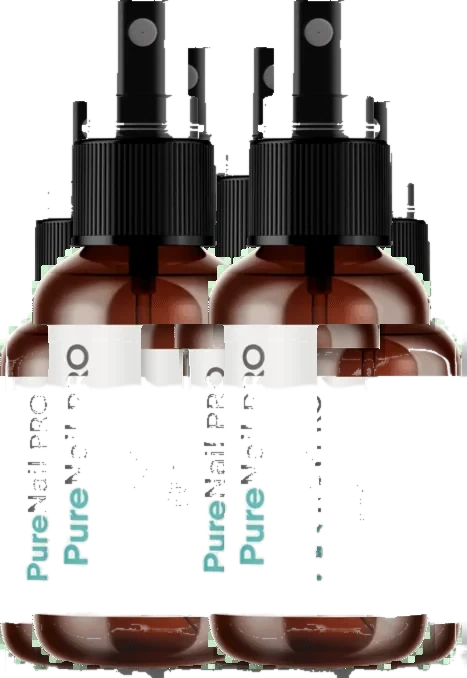
PureNail PRO turns daily nail and cuticle conditioning into a two-second spray of tea tree, jojoba and supporting botanical oils. Full ingredient list and current pricing are on the official page.
Check Availability and Pricing