Do Vitamins Help Nail Fungus? Weighing the Clinical Evidence
Quick Answer: Do Vitamins Help Nail Fungus?
There is no clinical trial evidence that any vitamin or mineral clears a fungal nail infection, and nothing should be sold on that basis. The evidence that does exist supports a narrower claim: correcting a genuine deficiency in nutrients such as iron, zinc, vitamin D or biotin improves the quality of the nail plate your body builds next, which affects how new growth looks and behaves. That is a real benefit to the material, and it is not the same as removing an organism from under the nail.
- Trial evidence for clearing infection: none worth citing, for any nutrient.
- Best-supported claim: correcting a measured deficiency improves nail plate quality.
- Practical step: test before supplementing, and get the nail diagnosed first.
The two questions hiding inside one search
When somebody asks whether vitamins help a fungal nail, they are almost always asking two questions at once without realising it. The first is whether a nutrient can act as an antifungal agent and clear the infection. The second is whether a nutrient can make the nail itself stronger, faster-growing and better looking. These have completely different answers, and lumping them together is how misleading claims get made without anyone technically lying.
To the first question, the answer is a clean no. Nothing in the vitamin aisle has antifungal pharmacology in a human nail. To the second, the answer is a qualified yes, with the qualification doing real work: if you are genuinely short of a nutrient the body needs to build keratin, correcting that shortfall helps, and if you are not short of it, taking more does nothing.
This article grades what is actually known, tier by tier, and is explicit about where the evidence runs out. We would rather tell you that a study does not exist than dress up a laboratory finding as a clinical one.
Do vitamins help nail fungus? Grading the evidence tier by tier
Evidence is not a binary. A finding can be true and still be nearly useless for predicting what will happen to you, depending on how it was produced. The hierarchy below runs from the strongest study designs down to the weakest, and it is worth noticing where the nutrient claims in this category actually sit.
| Evidence tier | What it looks like | What exists for nutrients and nails | How much weight it carries |
|---|---|---|---|
| Systematic review of randomised trials | Pooled RCTs with defined endpoints | None specific to vitamins for fungal nail disease | Would be decisive; does not exist here |
| Randomised controlled trial | Randomised, blinded, placebo-controlled | None with confirmed diagnosis and cure as the endpoint | Would be strong; absent |
| Small uncontrolled clinical study | Open-label, no placebo arm | Biotin and brittle nails, several decades old | Suggestive only; no infection endpoint |
| Observational association | Comparing nutrient status between groups | Some work linking low vitamin D or iron with nail problems | Cannot show cause and effect |
| Deficiency case reports | Documented nail changes with proven deficiency | Well documented for iron and zinc | Strong for deficiency, silent on supplementation |
| Laboratory and mechanism | Cell culture, biochemistry, nutrient pathways | Abundant for keratin synthesis and immune function | Explains plausibility, proves nothing clinical |
Read down the third column. The two rows that would settle the question are empty, and everything that is populated sits in the lower half of the hierarchy. That is not a scandal; it is what an under-researched area looks like. It does mean that anyone stating a confident answer in either direction is going beyond the data.
Where the biotin evidence actually comes from
Biotin is the nutrient most often named in this context, so it deserves precision. The relevant human work is a small set of studies published between the late 1980s and the early 1990s, looking at people with brittle nails, using doses in the low milligram range, and reporting improvements in nail thickness and splitting. Some of that work included electron microscopy of the nail plate, which is a nice touch, and some of it was genuinely uncontrolled, which is not.
What those studies did not do is enrol people with laboratory-confirmed fungal nail disease, and they did not measure whether an infection cleared. So when a product page cites "clinical studies" for biotin next to a headline about fungus, the citation is real and the implication is not. That is a specific and common form of misdirection, and it is worth learning to spot because it appears across the whole supplement category.
None of this makes biotin pointless. Adequate biotin is necessary, deficiency does produce nail and hair problems, and the brittle-nail signal is at least consistent with the biology. It simply belongs in the "may support nail quality" column and nowhere near the "helps with fungus" column.
The topical side of the same question
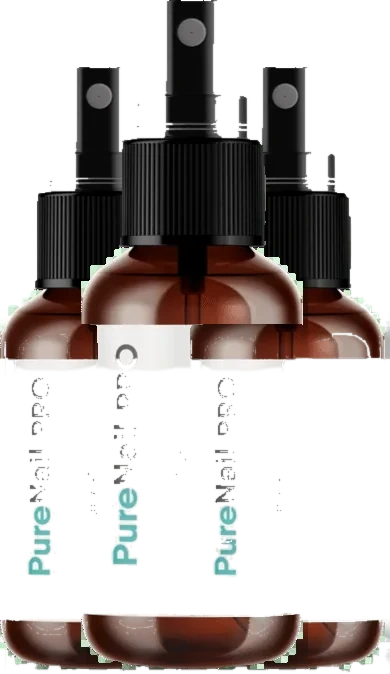
Anyone comparing options for the best nail fungus treatment eventually runs into the same evidence problem from the other direction. PureNail PRO is a cosmetic botanical spray for the appearance and condition of nails, and its page says so plainly.
See the Official PureNail PRO PageVitamin D, zinc and iron: association is not causation
A recurring pattern in this literature is the observational study that finds people with a nail problem also tend to have lower levels of some nutrient. Vitamin D turns up often, partly because low vitamin D turns up often in almost every population studied. Iron and zinc appear too, particularly in work on nail changes and hair loss.
These findings are worth knowing, and they are easy to over-read. Three explanations always compete. The nutrient shortfall might contribute to the problem. The problem, or whatever underlying illness caused it, might contribute to the shortfall. Or a third factor, such as age, chronic illness, poor diet, limited mobility or reduced sun exposure, might drive both independently. Observational data cannot separate these, which is exactly why the randomised trial sits at the top of the hierarchy.
What is not in dispute is the deficiency side. Iron deficiency produces documented nail changes including thinning, brittleness and in advanced cases the spoon-shaped deformity called koilonychia. Zinc deficiency produces its own recognisable pattern of nail and skin changes. In both cases, correcting the deficiency corrects the nail changes over subsequent growth. That is a clean, causal, well-documented story, and it is about deficiency, not about supplements in general.
What "no evidence" means, and what it does not
The phrase "no evidence" gets used as a weapon in both directions, so it is worth being careful with it. In this case it means that nobody has run the study, not that somebody ran it and found nothing. Those are very different situations. Absence of evidence genuinely is not evidence of absence.
But it also is not permission. When a study has not been done, the correct posture is uncertainty and modest claims, not optimism dressed as fact. The commercial incentive runs entirely the other way, which is why so much writing in this space treats a mechanism as a result. If a page tells you a nutrient "fights" a fungus, ask what was measured, in whom, and against what comparison. Usually the honest answer is that it inhibited something in a dish.
An untested claim is not a false claim. It is an unpaid invoice. Somebody still has to do the study, and until they do, the right word is "unknown" rather than "proven" or "debunked".
What this evidence cannot tell you
It cannot tell you that supplements will clear your nail. No trial supports that for any nutrient, and cosmetic and supplement products may not claim it. Confirmed onychomycosis is managed medically, with prescription oral or topical antifungals, and even those take many months and can fail or recur.
It cannot tell you whether you are deficient. Only a blood test does that. Guessing at deficiency from a nail is unreliable, and self-prescribing high-dose minerals has real downsides: excess zinc interferes with copper, excess iron is harmful in people who are not deficient, and high-dose biotin can distort some laboratory assays. Our companion piece on what zinc deficiency nail signs actually mean works through why a nail is such an unreliable proxy for a blood level.
It cannot tell you what is wrong with your nail. Trauma, psoriasis, lichen planus and age-related thickening all mimic fungal disease closely enough that clinicians confirm with testing rather than trusting appearance. Getting that wrong wastes a year.
It cannot substitute for a clinician. Especially if you have diabetes, peripheral vascular disease or a suppressed immune system, in which case foot problems are managed professionally rather than experimentally.
Safety note: this article is general information, not medical advice. Do not start high-dose vitamins or minerals without professional guidance, particularly if you are pregnant, nursing, taking prescription medication or managing a chronic condition. Tell your doctor about any biotin supplement before blood tests.
What to do when the evidence base is thin
A thin evidence base is not a reason for paralysis, it is a reason to prioritise the things that are well supported. Start with diagnosis, because everything downstream depends on it and because it is the single highest-value step available. Ask specifically whether the nail should be sampled for laboratory confirmation before committing to any long course of anything.
Next, test rather than guess on nutrition. If your history suggests a plausible shortfall, whether from heavy menstrual bleeding, a restrictive or vegan diet, coeliac disease, bariatric surgery, older age or very limited sun exposure, ask for the relevant bloods and correct what is genuinely low. This is the only nutritional intervention with solid support behind it, and it is cheap.
Then handle the unglamorous variables. Keep feet dry, rotate footwear so shoes dry fully, wear sandals in shared changing areas, trim nails straight across, and wash socks hot. Guides to the best nail fungus treatment at home skip these constantly because there is nothing to sell, yet they do more to reduce reinfection pressure than most products.
Finally, if you want a cosmetic topical for the look and feel of the nail and surrounding skin, pick one whose claims match its category. Comparing one best nail fungus treatment brand against another is easier once you know which claims are cosmetic and which are medical. Our companion piece on which nutrient deficiencies are actually linked to nail problems goes deeper on the testing side, and our full breakdown of what PureNail PRO contains and how it describes itself covers the topical option in detail. If you are choosing between botanicals, our tea tree oil versus oregano oil comparison weighs dilution and skin tolerance, and the full PureNail label breakdown shows what a finished blend actually declares.
Scientific references
- NIH Office of Dietary Supplements — Vitamin D fact sheet for health professionals
- NIH Office of Dietary Supplements — Biotin fact sheet for health professionals
- Harvard T.H. Chan School of Public Health — Vitamin D
- Mayo Clinic — Nail fungus: diagnosis and treatment
- Singal A. et al. — Vitamins and nail: in health and diseases, Clinics in Dermatology (2026)
PureNail PRO: what it is, in its own words
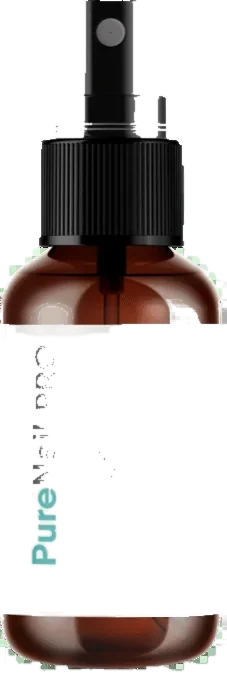
A topical cosmetic spray of tea tree, lavender, aloe and jojoba oils for the appearance and condition of nails and the skin around them. Full ingredient list and current pricing on the official page.
Check Availability and Pricing