PureNail Ingredients: Full Label Breakdown
Quick Answer: What is in PureNail?
The PureNail ingredients list runs to roughly seventeen items led by one recognized active, undecylenic acid USP 5%, an FDA-recognized OTC antifungal, supported by botanical oils like tea tree, clove, lemongrass and manuka, plus conditioning carriers such as jojoba, sweet almond and vitamin E, and menthol and camphor for a cooling feel. It is topical only, with no oral drug actives.
- One recognized active: undecylenic acid USP 5%, the labeled antifungal.
- Botanical support: tea tree, clove, lemongrass, manuka, camphor and menthol.
- Carriers and comfort: jojoba, sweet almond, flaxseed, chia, walnut oils and vitamin E.
How to read the PureNail ingredients list
If you want to judge a formula before you buy it, the PureNail ingredients list is a good one to learn on, because it is a clear example of a common structure: one recognized active doing the regulated work, surrounded by a supporting cast of botanicals and conditioning oils. The label runs to roughly seventeen items, and the single most important thing to understand is that they are not all playing the same position. Reading them as one undifferentiated pile of "natural stuff" is how shoppers get either over-impressed or unfairly cynical. Sorted into tiers, the formula tells an honest, legible story.
We will split the roughly seventeen ingredients into three groups. First, the one labeled drug active, undecylenic acid USP 5%, which is the only ingredient here that carries formal antifungal recognition. Second, the botanical oils, tea tree, clove, lemongrass, manuka, plus menthol and camphor, chosen for antifungal reputation, soothing, and a cooling sensation. Third, the carrier and conditioning oils, jojoba, sweet almond, flaxseed, chia and walnut, plus vitamin E, whose job is to spread the actives, condition the skin, and keep the whole thing tolerable for daily use. Throughout, we will flag what has real evidence and what rests on traditional use, without dressing either up as more than it is.
The one recognized active: undecylenic acid USP 5%
Everything else on the label supports this one ingredient. Undecylenic acid USP 5% is the labeled drug active in PureNail, and it is the only component recognized in the FDA over-the-counter monograph as a topical antifungal for skin and the nail surface. It is an eleven-carbon unsaturated fatty acid, originally derived from castor oil, so it is natural in origin while still being a genuine, monograph-recognized active rather than a hopeful extract. Its mechanism is well characterized: as a fatty acid it disrupts fungal cell membranes, interfering with the organism's structure and growth.
The 5% figure is a deliberate, tolerability-driven choice rather than a limitation, because a strength you can comfortably apply twice a day for the many months a nail takes to grow out beats a harsher one you abandon in a fortnight. We cover the science, the concentration question and the realistic timelines in depth in our dedicated piece on what the evidence shows about undecylenic acid for toenail fungus, which is essential background if this active is the reason you are considering the product. For the label breakdown, the key point is simply that this is the workhorse: the one ingredient with formal antifungal standing, and the anchor the rest of the formula is built to support.
See the full label for yourself
Rather than take any summary on faith, read the complete PureNail ingredient panel, concentrations and directions on the official page, then come back and weigh it against the tiers below.
View the Official PureNail LabelThe botanical oils: reputation, cooling, and honest evidence
The middle tier is where most of the marketing energy lives, and where it pays to be precise about what is proven and what is traditional. These botanicals are chosen for antifungal reputation, a soothing feel, and sensory cues that make the product pleasant enough to keep using. They are not idle, but they are supporting players, not the recognized active.
Tea tree oil is the strongest of the group. Distilled from Melaleuca alternifolia, its active terpinen-4-ol gives it the most supportive human nail research of any botanical in the formula, which is why it appears in so many nail products. It is the botanical here with the best claim to genuine, studied activity, though still short of the active's regulatory standing. Our review of what the evidence actually says about tea tree oil for nail care unpacks its strengths and limits.
Clove oil contributes eugenol, a compound with well-documented antimicrobial activity in laboratory settings and a long traditional-use history. It is potent, which is a double edge: real activity in a dish, but also one of the more common irritants, so concentration and tolerance matter. Lemongrass oil brings citral, again with antifungal activity shown mostly in vitro, plus a fresh scent. Manuka oil, from the New Zealand tea tree relative, is prized in traditional use for antimicrobial properties, with a growing but still early evidence base. Honestly framed, clove, lemongrass and manuka are promising traditional-and-laboratory botanicals rather than clinically proven nail treatments.
Menthol and camphor play a different role: sensation. Both produce a cooling, tingling feel that signals the product is on and working, and camphor has a mild traditional topical reputation of its own. The cooling is comfort and cue rather than antifungal muscle, and for some people the tingle is noticeable, which is worth knowing before your first application.
The carrier and conditioning oils: the unglamorous half
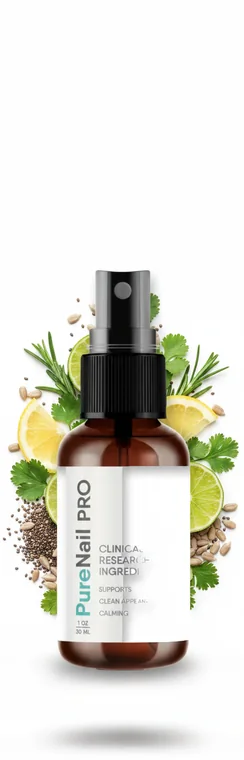
The third tier rarely makes the sales headline, but it is doing essential work: spreading the actives evenly, conditioning the skin around the nail, and keeping a twice-daily essential-oil routine from drying and cracking the cuticles over months. Jojoba oil is the standout, technically a liquid wax ester that closely mimics the skin's own sebum, so it absorbs smoothly and conditions the nail fold without a heavy film. Sweet almond oil is a classic emollient rich in fatty acids and vitamin E; flaxseed, chia and walnut oils add omega-rich lipids that nourish and soften the surrounding skin. Added vitamin E acts as both a skin conditioner and a natural antioxidant that helps protect the oils from going rancid.
It is easy to dismiss these as filler, but on a product you are meant to apply for the better part of a year, tolerability is not a footnote, it is the whole reason the routine survives. The conditioning oils are what let a recognized active sit at a comfortable strength and still get used consistently, and consistency is the real predictor of any result in slow-growing nails. If you want to understand why formulators lean on this particular wax ester so heavily, our deeper look at the benefits of jojoba oil for nails explains its role in detail.
The PureNail ingredients, sorted into tiers
Here is the whole label compressed into a single grid so you can see, at a glance, which ingredient is doing which job and how strong the evidence behind each really is.
| Ingredient | Role in the formula | Evidence tier |
|---|---|---|
| Undecylenic acid USP 5% | Labeled antifungal active | FDA OTC-recognized |
| Tea tree oil | Botanical antifungal reputation | Supportive human research |
| Clove oil (eugenol) | Antimicrobial botanical | Lab and traditional use |
| Lemongrass oil (citral) | Antifungal botanical, scent | Lab and traditional use |
| Manuka oil | Antimicrobial botanical | Early, traditional use |
| Menthol | Cooling sensation | Comfort, not antifungal |
| Camphor | Cooling, mild topical feel | Comfort, traditional use |
| Jojoba oil | Carrier, cuticle conditioner | Conditioning |
| Sweet almond, flaxseed, chia, walnut oils | Emollient carriers | Conditioning |
| Vitamin E | Skin conditioner, antioxidant | Conditioning, preservative aid |
Read this way, the formula is neither the miracle some sales pages imply nor the empty botanical placebo a cynic might assume. It is one recognized antifungal active, a stack of botanicals ranging from well-studied to traditional, and a base of conditioning oils that make the routine sustainable. That is a reasonable, honest structure, and knowing which tier you are paying for is exactly what lets you decide if it fits your situation.
The most useful thing about the PureNail label is not any single hero ingredient. It is that once you sort the list into active, botanical and carrier, you can see precisely what you are buying and what you are not.
Is it natural, and is it harsh? An honest verdict
Two questions dominate the shopper mailbag, so let us answer both plainly. Is PureNail all natural? Mostly, but not entirely, and honesty matters here. The bulk of the formula is plant-derived oils, and even the active, undecylenic acid, is derived from castor oil, but that active is still a monograph-recognized drug ingredient, so calling the product purely all-natural with no actives would be inaccurate. The fair description is a largely botanical formula built around one recognized active.
Is it harsh? The base is conditioning oils rather than solvents, and there are no oral drug actives; it is formulated for topical use only. The realistic risk with any essential-oil product is skin irritation or an allergic reaction, most plausibly from the potent oils such as clove and tea tree, or a stronger-than-expected cooling tingle from menthol and camphor. None of that is exotic; it is the ordinary caution that applies to any concentrated botanical you put on skin daily. Patch-test on a small area first, keep it off broken skin, and stop if redness, itching or burning develops. For real-world impressions of how the formula feels and performs in practice, our roundup of honest PureNail reviews and whether it lives up to the claims collects user experiences, and if you are still comparing formats and formulas across the category, our 2026 buyer's guide to choosing a nail care spray gives you a neutral checklist to score any bottle against.
Safety note: this article is general information, not medical advice, and ingredient roles are described as claimed on the label and in the literature, not as guaranteed effects. Patch-test any essential-oil product before regular use, keep it off broken skin, and never swallow it. See a doctor or podiatrist for any nail that is painful, thickening, lifting or spreading, and check with a clinician first if you are pregnant, nursing, diabetic or managing poor circulation.
Scientific references
- U.S. FDA — Over-the-counter (OTC) drug monographs
- NIH National Center for Complementary and Integrative Health — Tea tree oil
- Pinto E. et al. — Antifungal activity of clove essential oil against Candida, Aspergillus and dermatophyte species, Journal of Medical Microbiology (2009)
- Pazyar N. et al. — Jojoba in dermatology: a succinct review, Giornale Italiano di Dermatologia e Venereologia (2013)
- American Academy of Dermatology — 11 dermatologists’ tips for healthy nails
Related reading
One recognized active, a botanical stack, priced by the pack
Undecylenic acid USP 5% with tea tree, clove, manuka and conditioning oils in a fine-mist spray for daily nail care. Check the current single and multi-bottle pricing and the full panel on the official page.
Check Availability and Pricing