Jojoba Oil for Nails: Benefits and How It Helps
Quick Answer: What Does Jojoba Oil Do for Nails?
Jojoba oil for nails works because it is a liquid wax with a structure almost identical to the skin's own sebum, so it absorbs into the cuticle and surface layers rather than sitting on top. That helps lock in moisture, keep the plate flexible, and calm the dry skin that frames each nail — a cosmetic conditioning effect, not a cure.
- Why it fits: its sebum-like makeup lets it condition where creams sit on the surface.
- What it changes: moisture, flexibility and the groomed look of the cuticle.
- Key caveat: it is a moisturiser for appearance, not a treatment for infection or disease.
Why jojoba oil for nails earns a place in the cabinet
Walk down the nail aisle and you will find dozens of cuticle oils, and a striking number of them list jojoba near the top of the ingredients. That is not marketing fashion. Jojoba has quietly become a staple of nail and skin care because of a genuine quirk of chemistry: despite the name, it is not really an oil at all. It is a liquid wax ester pressed from the seed of the desert shrub Simmondsia chinensis, and its molecular makeup is closer to human sebum — the natural moisture your skin produces — than almost any other plant extract you can buy.
That resemblance is the whole reason it is so useful. When your skin's own sebum production drops, whether from age, cold weather, frequent hand-washing or harsh manicure chemicals, the skin around the nail dries out, the cuticle tightens and cracks, and the nail plate itself loses the pliability that keeps it from snapping. An ingredient that mimics the very substance you are short of slots neatly into that gap. It is worth being clear from the start, though, about what that means and what it does not: jojoba is a cosmetic conditioner for the appearance and feel of your nails and the skin around them. It is not a medicine, and nothing here is a claim to treat or cure any nail condition.
What jojoba actually is, and why the sebum resemblance matters
Most of the oils people rub on their nails — olive, coconut, almond — are triglycerides. They are perfectly good moisturisers, but they are structurally quite different from what your skin makes. Jojoba is different because it is built from wax esters, and roughly a quarter of human sebum is also wax esters. To your skin, jojoba reads as familiar. It spreads into the tiny grooves of the cuticle and the surface layers of the nail plate instead of pooling on top, and because it is so stable it does not turn rancid quickly the way some seed oils do.
This is why jojoba is described as an occlusive-plus-emollient in one: it forms a light, breathable barrier that slows the evaporation of water from the nail and surrounding skin, while its texture softens and smooths at the same time. The nail plate is not a living, thirsty tissue in the way skin is, but its flexibility depends heavily on its water content. A plate that has dried out is a plate that is stiff, prone to catching, and quick to peel at the free edge. Slowing that water loss is the single most useful thing a topical oil can do for the look of a nail, and jojoba does it without the greasy residue heavier oils leave behind.
Conditioning the cuticle, the part that actually shows
Ask a manicurist where nails most often look neglected and the answer is rarely the nail itself — it is the cuticle and the skin around it. Dry, lifted, hangnail-prone cuticles make an otherwise healthy hand look untidy, and picking at them makes it worse. This is jojoba's home turf. Massaged into the cuticle once or twice a day, it keeps that rim of skin supple, reduces the ragged catching that tempts you to pick, and gives the base of the nail a cleaner, more cared-for line.
There is a practical bonus here that people underrate. A well-conditioned cuticle is a better seal. The cuticle exists to protect the matrix — the growth zone at the base of the nail where new plate is formed — from water, debris and irritants. When you let it dry out and split, you compromise that seal precisely over the tissue that determines the quality of the nail growing in. You cannot force a better nail with oil, but keeping the surrounding skin intact and comfortable is a sensible, low-effort habit, and it is the part of nail grooming that responds fastest to attention. If dry, tight cuticles are your main complaint, our companion guide to the benefits of cuticle oil for everyday nail health goes deeper on the routine.
Jojoba, tea tree and aloe in one daily spray
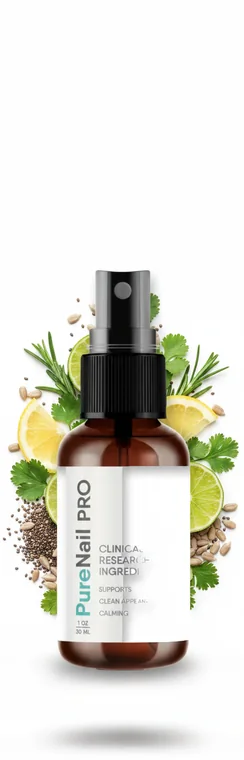
If you would rather not mix your own carrier and essential oils, PureNail PRO puts jojoba alongside tea tree, lavender and aloe in a single cosmetic spray for the appearance and condition of your nails. Full ingredient list and current pricing on the official page.
See the Official PureNail PRO PageJojoba oil for brittle and splitting nails
Brittleness is the complaint that sends most people looking for a nail oil in the first place, so it deserves an honest answer. The majority of everyday brittle, peeling nails — the kind that split into layers at the tip, a pattern dermatologists call onychoschizia — are simply dry. Repeated wetting and drying, detergents, hand sanitiser, acetone removers and cold air all strip moisture faster than it can be replaced, and the plate becomes stiff and flaky. Because jojoba slows that moisture loss and keeps the plate flexible, it directly targets the mechanism behind the most common form of brittleness.
What it will not do is equally important. Jojoba cannot rebuild a nail that has already grown out; nail is dead keratin, and the section past the fingertip was formed weeks or months ago and will not change. It cannot correct an underlying cause such as an iron shortfall, a thyroid problem or the aftermath of aggressive gel manicures. If your nails have suddenly changed, or they are brittle alongside other symptoms, the oil is a comfort measure, not an answer — the fix is upstream. We cover that full picture, from hydration to nutrition to easing off harsh removers, in our guide to Best Nail Fungus Treatment 2026: OTC Options Compared, Honestly. For the day-to-day appearance of dryness-driven brittleness, though, a conditioning oil used consistently is one of the genuinely useful things you can do.
Jojoba versus other common nail oils, at a glance
| Oil | Structure | What it does best for nails |
|---|---|---|
| Jojoba | Liquid wax ester, sebum-like | Absorbs into the cuticle, seals moisture, non-greasy conditioning |
| Coconut | Saturated triglyceride | Rich surface moisturiser; can feel heavy and sit on top |
| Sweet almond | Triglyceride, high in oleic acid | Softening emollient; absorbs moderately |
| Vitamin E | Antioxidant, often in a carrier | Conditioning antioxidant; usually a supporting ingredient |
| Tea tree | Essential oil (needs diluting) | Botanical character; too strong to use neat, pairs with jojoba |
Pairing jojoba with tea tree in a blend like PureNail
Jojoba rarely works alone in a finished product, and there is a good reason for that. Essential oils such as tea tree and lavender are potent and can irritate the skin if applied undiluted, so they need a carrier — a gentle base oil that dilutes them to a comfortable strength and helps them spread. Jojoba is close to an ideal carrier: it is skin-friendly, stable, low-odour and conditioning in its own right. So when you see jojoba and tea tree listed together in a blend such as PureNail, they are doing complementary jobs. Jojoba conditions the cuticle and softens the plate; tea tree adds the botanical antimicrobial character it is known for; lavender and aloe round out the soothing side.
If you want the detail on the tea tree half of that pairing — what the laboratory data supports and, just as importantly, where the human evidence stops — our evidence review of tea tree oil for nail care lays it out without overselling. The short version is that a good blend is more than the sum of a marketing list: the carrier oil is not filler, it is what makes the whole thing usable on skin every day.
Three myths worth clearing up
Myth one: more oil means faster results. Drowning your nails in oil does not speed anything up. Jojoba absorbs to a point and the rest just transfers onto whatever you touch. A drop or two worked in properly, twice a day, does more than a heavy slick once a week. Nails grow slowly regardless, so the honest measure of success is weeks of consistency, not the size of each application.
Myth two: jojoba treats nail fungus. It does not, and any product implying a plant oil clears an infection is overstepping. Jojoba is a moisturiser. Confirmed nail fungus (onychomycosis) is a medical condition that usually needs prescription antifungal treatment, and a discoloured, thickening or lifting nail should be seen by a clinician rather than managed with a cuticle oil.
Myth three: it only helps the surface, so it is pointless. Surface and cuticle conditioning is exactly the point of a topical oil, and it is a legitimate goal. The look of your nails is largely the look of the plate's surface and the skin framing it, and both respond to consistent moisture. Expecting an oil to change the internal structure of the nail is the mistake; expecting it to improve appearance and comfort is entirely reasonable.
How to use jojoba oil on nails
The routine is simple, which is a large part of why it works. Clean, slightly damp nails absorb best, so the ideal moment is straight after washing your hands or stepping out of a shower or bath. Put a small amount of oil, or a couple of sprays of a jojoba-based blend, onto each nail and the cuticle, then massage it in for a few seconds per finger, working from the cuticle outward and along the free edge. Do this once or twice a day. At night is ideal because the oil has hours to sit undisturbed.
A few small habits make the difference. Reapply after anything that strips moisture — washing up, gardening, hand sanitiser. Wear gloves for wet or chemical chores so you are not fighting the oil with detergent all day. Ease off acetone-based removers and back-to-back gel manicures, which undo conditioning faster than any oil can rebuild it. And patch-test any blend containing essential oils on the inside of your wrist before regular use, because even well-diluted tea tree or lavender can bother sensitive skin. Then be patient: because a fingernail takes months to grow out fully, the fair test is the new nail emerging at the base, not the older nail at the tip.
Safety note: this article is general cosmetic information, not medical advice. Jojoba oil is for external use only. If you use a blend that contains essential oils, patch-test first, keep it away from the eyes, and stop if the skin reacts. Speak to a professional if you are pregnant, nursing, or noticing sudden or painful changes in your nails.
Related reading
Scientific references
- Pazyar N. et al. — Jojoba in dermatology: a succinct review, Giornale Italiano di Dermatologia e Venereologia (2013)
- American Academy of Dermatology — 11 dermatologists’ tips for healthy nails
- American Academy of Dermatology — Can you keep your nails looking their best?
- Chessa M.A. et al. — Pathogenesis, clinical signs and treatment recommendations in brittle nails: a review, Dermatology and Therapy (2020)
Put jojoba to work in your daily routine
PureNail PRO is a topical cosmetic spray of jojoba, tea tree, lavender and aloe for the appearance and condition of nails and the skin around them. See the full ingredient breakdown and current pricing on the official page.
Check Availability and Pricing