Best Nail Fungus Treatment 2026: OTC Options Compared, Honestly
Quick Answer: What Is the Best Nail Fungus Treatment You Can Buy Over the Counter?
The best nail fungus treatment for most people at home is a topical antifungal used consistently for months, because that is where the human evidence actually is. In small trials, 100% tea tree oil reached roughly an 18% full cure at six months versus about 11% for clotrimazole, with around 60% reporting partial improvement twice daily. Those are modest odds, so consistency and patience beat brand hype, and a confirmed infection still belongs with a clinician.
- Most human data: medicated topicals and 100% tea tree oil, applied daily for months.
- Biggest lever: consistency plus foot hygiene, not the label on the bottle.
- Honest caveat: cosmetic oil sprays like PureNail PRO are for the look of nails, not a cure.
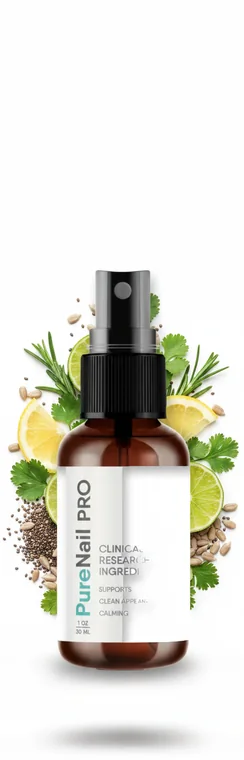
If you have spent an evening typing "best nail fungus treatment" into a search bar and closing tab after tab, you already know the problem: every page claims to be the answer, and almost none of them tell you what kind of product they are actually selling. This guide does the boring, useful thing instead. It sorts the at-home nail fungus treatment landscape into honest categories, shows you the cure-rate numbers that the marketing pages leave out, and tells you plainly where a cosmetic spray like PureNail PRO fits and where it does not.
Nail fungus, or onychomycosis to give it its clinical name, is stubborn for a reason we will keep coming back to: the thing you want to reach lives under a hard plate of keratin, and the nail you can see is already dead tissue that cannot heal. That single fact explains why results take months, why patience matters more than any brand, and why so many people feel misled when a bottle does not deliver in a fortnight. Let us walk through the real options.
What "best nail fungus treatment" actually means at home
People searching for the best nail fungus treatment are usually chasing one of three things: something they can use without a prescription, something that avoids the blood tests and liver monitoring that come with oral antifungal tablets, or something to use alongside whatever a doctor has already recommended. All three are reasonable. The mistake is assuming that "best" means "fastest cure," when in this category it really means "the option whose evidence and honesty match what you need."
It helps to split every product on the shelf into four buckets. First, medicated topical antifungals sold over the counter, such as clotrimazole and terbinafine creams, which are formulated to kill fungus but were mostly designed for skin, not thick nail. Second, medicated nail lacquers and specialist topicals with penetration systems built for the nail plate. Third, single botanical actives with real laboratory credentials, of which tea tree oil is the best studied. And fourth, cosmetic oil sprays and grooming products, which are sold for appearance and cannot legally claim to treat infection. PureNail PRO sits squarely in that fourth bucket, and any honest page tells you so up front.
The OTC options compared: what the evidence shows
Here is the comparison that product pages tend to skip, because the numbers are humbling for everyone. The most-cited head-to-head data comes from work on 100% tea tree oil applied twice daily, which reported roughly an 18% complete cure at six months against about 11% for clotrimazole solution, and roughly 60% of participants describing partial improvement. Read those figures carefully: even the better performer left most people without a full cure, and the comparison drug did worse. That is the reality of topical treatment for a plate the medicine struggles to cross.
| Option | Category | What the evidence shows | Typical use | Honest limitation |
|---|---|---|---|---|
| 100% tea tree oil | Single botanical active | ~18% full cure and ~60% partial improvement at 6 months in small trials | Twice daily, applied to nail and fold | Can irritate skin; modest cure rate |
| Clotrimazole solution | OTC medicated topical | ~11% full cure in the same comparison | Once or twice daily | Designed for skin, penetrates nail poorly |
| Terbinafine cream (OTC) | OTC medicated topical | Strong on skin (athlete's foot); weak nail-plate penetration | Daily to surrounding skin | Not built to reach under the nail |
| Medicated nail lacquer | Specialist topical | Purpose-built penetration; still needs many months of daily use | Daily, often up to 48 weeks | Slow; adherence is the real challenge |
| Cosmetic oil spray (e.g. PureNail PRO) | Grooming / appearance | Conditions cuticle and skin; no cure-rate claim permitted | Twice daily as grooming | Cosmetic only; not an antifungal drug |
Notice what the third column is really telling you. The medicated options have measured outcomes, and even they are modest. The cosmetic spray sits in a different column entirely, because it is not measured against cure rates at all. That is not a knock on it, it is a category difference, and understanding it is the difference between a satisfied buyer and a disappointed one. If you want the full lab-to-nail picture for the botanical with the most human data, our deep dive into the clinical evidence behind tea tree oil for nails lays out every study.
Where a botanical spray honestly belongs in your routine
If you want a tea tree, lavender, aloe and jojoba spray for the day-to-day look and condition of your nails and cuticles, described without medical hype, the official page is where the label and the honest positioning live.
See the Official PureNail PRO PageWhy nail regrowth takes 6 to 12 months
This is the single fact that reframes everything. A nail is dead keratin. Whatever damage or discolouration is already in the plate will not reverse, no matter what you apply to it. The only way to a clean nail is to grow a new one from the matrix at the base while the affected part is gradually trimmed away. A fingernail replaces itself in roughly four to six months; a toenail, the more common battleground, takes six to twelve months and sometimes longer in older adults or where circulation is reduced.
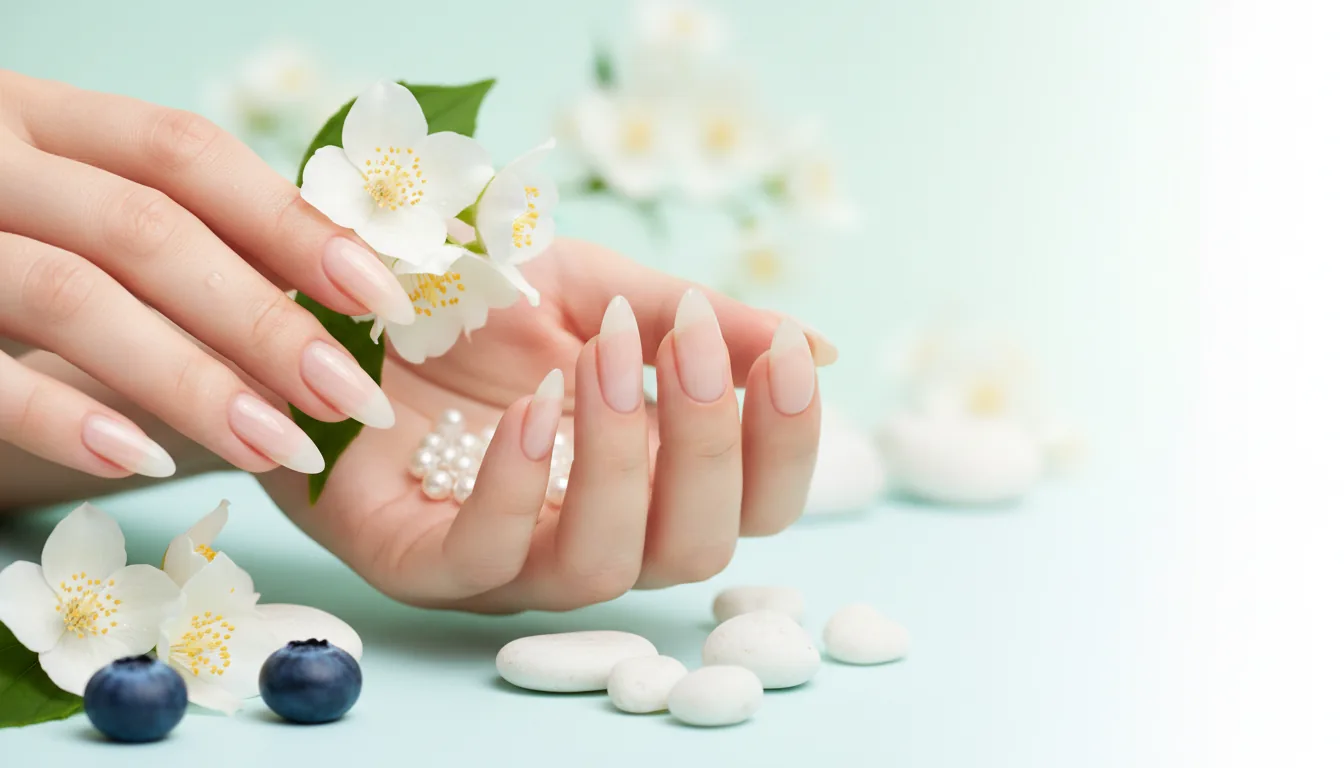
Practically, this means you should judge progress at the wrong-looking band nearest the cuticle after several months, comparing it with the older band ahead of it. If new growth is coming in clear, something is working, even if the tip still looks rough. If you switch products every three weeks because nothing "worked," you are restarting the clock on a process that was always going to take the better part of a year. The most common reason at-home treatment fails is not the product, it is quitting at week six.
Three myths worth clearing up
Myth one: a stronger smell or a burning feeling means it is working. It usually means the opposite. Undiluted essential oils and harsh solvents can irritate or even chemically burn the skin around the nail, and inflamed skin is not a sign of progress. A well-formulated product should feel unremarkable. If something stings, stops the skin, or leaves it red, that is a reason to stop and patch-test, not a badge of potency.
Myth two: natural means it cannot be a drug, so it is automatically safe and mild. Plant-derived compounds can be potent, can sensitise skin, and can interact with medicines. "Natural" is a marketing word, not a safety rating. Equally, natural does not mean effective; the two ideas get bundled together constantly and they point in opposite directions from the truth. Judge any product by its evidence and its label, not by the word on the front.
Myth three: one product will fix it and keep it fixed. Reinfection is extremely common and is driven by ordinary things: damp shoes, shared shower floors, nails cut into the corners, and repeated micro-trauma from sport. No spray, cream or lacquer compensates for footwear that keeps injuring the nail. The people who get lasting results treat the environment as seriously as the nail, and our review of whether vitamins and supplements help nail fungus covers the internal-health angle that also matters.
A sensible at-home protocol
If you want a rational plan rather than a shopping spree, here it is. Get a diagnosis first, because a discoloured toenail can be several things and confirmation is a simple test. Choose one topical approach with real evidence and commit to it for at least three to six months rather than hopping between bottles. Buy a finished, properly diluted product instead of mixing potent essential oils yourself, since home-dilution errors are the leading cause of irritation in this category. Patch-test on your inner forearm for twenty-four hours before daily use.
Then win the unglamorous variables, which are the ones that actually change outcomes. Dry thoroughly between the toes. Rotate shoes so each pair dries out fully. Wear sandals in communal showers. Trim straight across and not too short. Replace old socks and consider a hot wash. These steps are free, unsellable, and quietly more effective at preventing reinfection than any upgrade to a fancier bottle. For a closer look at two popular botanical actives and their limits, see how oregano oil and caprylic acid perform against nail fungus.
The best nail fungus treatment is not the one with the loudest claims. It is the one whose category matches your problem, applied consistently long enough for a new nail to grow.
So where does PureNail PRO fit?
PureNail PRO is a topical cosmetic spray of tea tree, lavender, aloe and jojoba oils, sold for the appearance and condition of nails and the surrounding skin. It is not an antifungal drug and makes no cure claim, which is exactly the honesty you want in a category full of overreach. If your nails are simply neglected, dry at the cuticle, or you want a pleasant grooming step to keep them looking cleaner, a botanical spray is a reasonable choice. If you have a confirmed infection, treat it as a companion to medical care and good habits, never a substitute. For the full picture on what it can and cannot do, read our evidence-based PureNail review.
Safety note: this article is general information, not medical advice. Cosmetic sprays are not treatments for nail fungus. Essential oils are for external use only and must never be swallowed; never apply them undiluted. Seek professional care for any nail that is painful, spreading, lifting or associated with diabetes or poor circulation, and speak to a clinician before using essential-oil products if you are pregnant or nursing.
Related reading
Scientific references
- Mayo Clinic — Nail fungus: diagnosis and treatment
- NIH National Center for Complementary and Integrative Health — Tea tree oil
- Buck D.S. et al. — Comparison of two topical preparations for the treatment of onychomycosis: Melaleuca alternifolia (tea tree) oil and clotrimazole, Journal of Family Practice (1994)
- American Academy of Dermatology — Nail fungus: overview
- NHS — Fungal nail infection
PureNail PRO: botanical oils, described without the hype
Tea tree, lavender, aloe and jojoba in a topical cosmetic spray for the appearance and condition of nails and the skin around them. Full ingredient list, packs and current pricing on the official page.
Check Availability and Pricing