Natural Product for Nail Fungus and Toenail Fungus: Oregano Oil and Caprylic Acid
Quick Answer: Do Oregano Oil and Caprylic Acid Work?
Both have genuine, repeatable antifungal activity in laboratory conditions: oregano oil through its carvacrol and thymol content, and caprylic acid as a medium-chain fatty acid that disrupts fungal cell membranes. That is real chemistry, but it is measured in a dish, not through a human nail. There is almost no clinical trial evidence showing either one reaching an organism beneath a thick keratin plate in a concentration that changes the outcome, so the fair description is a plausible cosmetic ingredient for the appearance and condition of nails, not a remedy for an infection.
- Strongest evidence: in-vitro inhibition of dermatophytes and yeasts, replicated in many labs.
- Biggest gap: nail penetration and human outcomes, which are barely studied for either.
- Key caveat: undiluted essential oils irritate skin, and a confirmed infection needs a clinician.
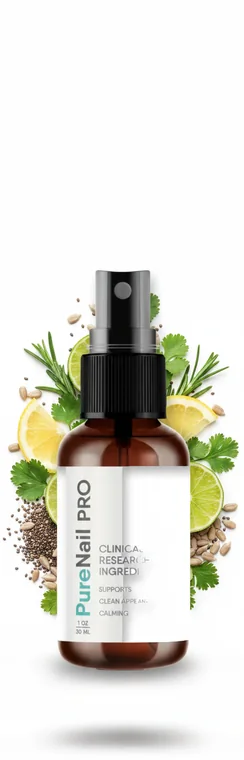
What people actually mean by a natural nail product
Search demand in this category is enormous and remarkably specific. People type variations of best fungal nail treatment natural, and they are usually after one of three things: something they can use at home without a prescription, something that does not carry the liver-monitoring baggage of oral antifungal tablets, or something to use alongside whatever a clinician has already given them. Those are all reasonable motivations, and they deserve a straight answer rather than a sales page.
The trouble is that "natural" is a marketing word, not a regulatory or pharmacological one. Plant extracts can be potent, can interact with medicines, and can cause allergic reactions; a compound being plant-derived tells you nothing about whether it works or whether it is safe at a given concentration. Two of the most commonly promoted actives in this space are oregano oil and caprylic acid, and both are interesting enough to deserve a proper look rather than either a rubber stamp or a sneer.
We are going to do something slightly unusual and separate three questions that normally get blurred together. Does the compound kill fungi in a controlled setting? Can it physically get to where the fungus lives in a real nail? And has anyone actually measured what happens to real people using it? The answers, in order, are yes, probably not very well, and almost nobody has.
Oregano oil: carvacrol, thymol and the laboratory record
Oil of oregano is steam-distilled from Origanum vulgare and related species. Its activity is dominated by two phenolic monoterpenes, carvacrol and thymol, which are the same family of compounds that give thyme its antiseptic reputation. The mechanism is well described: these phenols partition into microbial cell membranes, increase permeability, and cause leakage of ions and cell contents until the organism cannot maintain its internal environment. It is a blunt, physical mode of action rather than a targeted enzyme inhibition, which is one reason resistance to it is not a prominent concern.
Laboratory work on carvacrol and oregano essential oil against fungi is genuinely extensive, spanning food-preservation research, agricultural pathology and clinical microbiology. Across that literature, activity against yeasts such as Candida species and against dermatophyte moulds is a repeated finding. So when a formulator says the ingredient has antifungal properties, that statement is defensible at the level of the compound.
Where honesty is required is the next step. The concentrations that produce clean inhibition zones on an agar plate are not necessarily the concentrations you can safely leave on skin, and the organism on that plate is not sitting under half a millimetre of compacted keratin. Oregano oil is also one of the more irritating essential oils in common use. Neat application to skin can cause burning and chemical irritation, which is precisely why cosmetic formulations use it at low percentages in a carrier oil. That tolerance gap is the main reason most nail products lead with tea tree instead, as our tea tree oil versus oregano oil head-to-head sets out.
Caprylic acid: the eight-carbon fatty acid from coconut
Caprylic acid, also written as octanoic acid or C8, is a medium-chain saturated fatty acid found naturally in coconut oil, palm kernel oil and in smaller amounts in milk fat. It appears in cosmetics as an emollient and mild antimicrobial, and in supplements as part of MCT preparations aimed mostly at metabolism rather than at nails.
The antifungal interest in caprylic acid comes largely from work on Candida, where medium-chain fatty acids show membrane-disrupting activity in culture and can interfere with the yeast-to-hyphal transition. That is a legitimate laboratory finding and it explains why the ingredient shows up in so many products aimed at fungal concerns. Coconut-derived fatty acids in general, including lauric acid, share this broad membrane-active profile.
The gap here is even wider than with oregano oil. Most nail fungus in the feet is caused by dermatophytes such as Trichophyton rubrum, not by Candida, so a large slice of the supporting literature is about a different organism than the one most people are dealing with. Layer on the absence of nail-penetration data and the absence of controlled human trials, and what remains is a well-tolerated cosmetic emollient with an interesting mechanism and very little to say about outcomes.
How to judge a natural product for nail fungus and toenail fungus
The most useful thing a buyer can do is stop asking whether an ingredient is "proven" and start asking what kind of evidence supports it. Those are very different questions, and the table below is the version of a product page that nobody prints.
| Ingredient | Main active compounds | Typical cosmetic use level | Type of evidence available | Irritation risk |
|---|---|---|---|---|
| Oregano oil | Carvacrol, thymol | Fractions of a percent to low single digits, in carrier | Extensive in-vitro; no meaningful human nail trials | High if undiluted |
| Caprylic acid (C8) | Octanoic acid | Low percentage as emollient and preservative booster | In-vitro, mostly against Candida; no human nail trials | Low |
| Tea tree oil | Terpinen-4-ol | Commonly a few percent in cosmetics | Best-studied botanical here; limited and mixed human data | Moderate |
| Lavender oil | Linalool, linalyl acetate | Low percentage, often for scent | Some in-vitro antimicrobial work; little nail data | Low to moderate |
| Jojoba or coconut carrier | Wax esters, fatty acids | Bulk of the formula | Well established as skin and cuticle conditioners | Very low |
| Prescription topical antifungal | Efinaconazole, ciclopirox, amorolfine | Fixed pharmaceutical strength | Randomised controlled trials with measured cure rates | Varies; medically supervised |
Look at the fourth column top to bottom. Only the last row rests on randomised controlled trials measuring what happens to real nails in real people. Everything above it rests on mechanism plus laboratory activity, which is a legitimate reason to include an ingredient in a cosmetic and an illegitimate reason to promise a result. Any brand that blurs those two rows is telling you something about itself.
Where a botanical spray honestly fits
If you have been comparing options and wondering where to buy nail fungus treatment alternatives that describe themselves accurately, the label is the place to start. PureNail PRO is a cosmetic botanical spray for the appearance and condition of nails and the surrounding skin.
See the Official PureNail PRO PageThe nail plate is a barrier, and that is the real obstacle
Skin absorbs things. That is why transdermal patches exist. The nail plate is a different material entirely: roughly a hundred compressed layers of hard keratin, densely cross-linked by disulphide bonds, with a low lipid content and a hydration level far below that of skin. It behaves less like a membrane and more like a hydrophilic gel barrier, which has an awkward consequence for oils. Lipophilic compounds, which is what essential oils are, cross skin reasonably well and cross nail poorly. The very property that makes an oil pleasant on skin works against it on a nail.
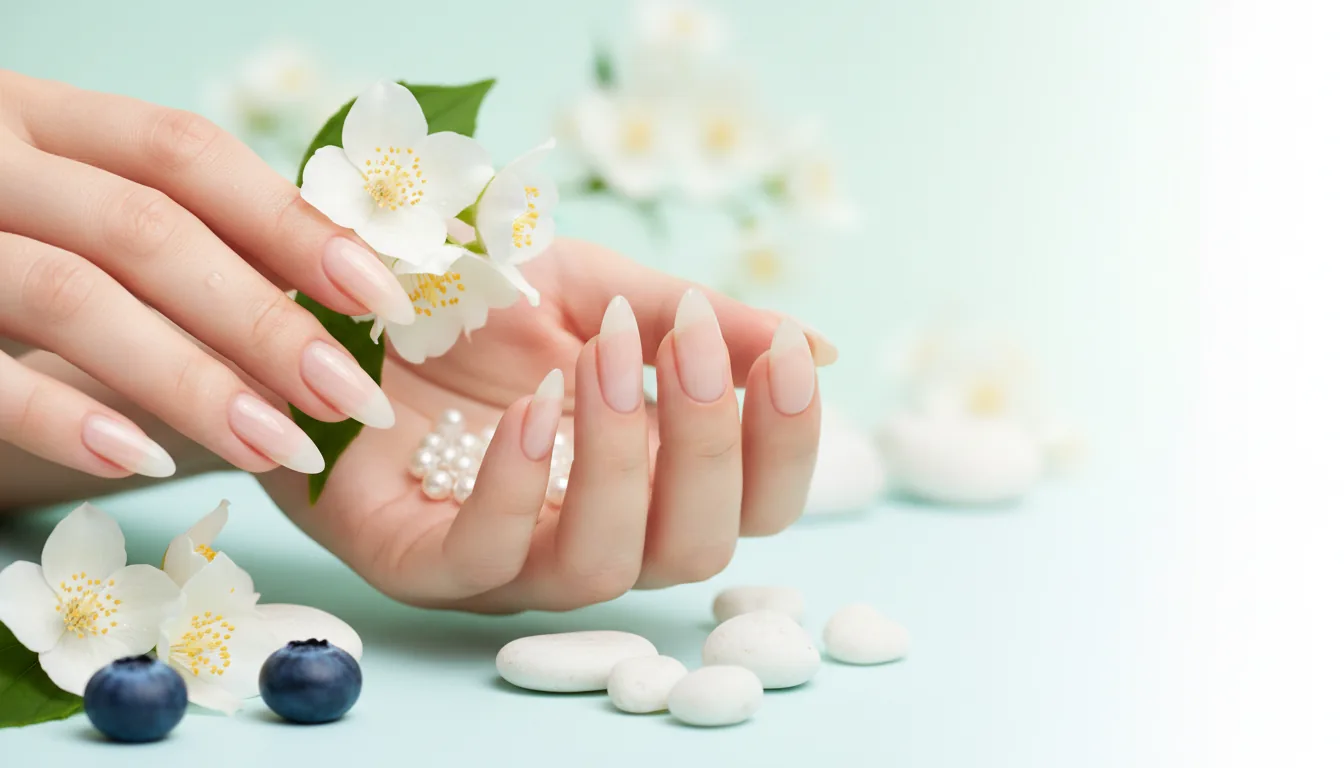
This is not a fringe objection; it is the central problem in the entire field. It is the reason pharmaceutical companies spent years developing topical formulations with penetration enhancers and specific solvent systems, and it is the reason those prescription lacquers still require daily application for something like forty-eight weeks. If a purpose-built pharmaceutical needs that much engineering and that much time, an over-the-counter oil applied casually is not quietly solving the same problem.
What a topical botanical can do sits above the plate and around it: condition the cuticle, soften the skin at the nail fold, reduce the ragged look of a neglected edge, and leave the surface looking cleaner. That is a real cosmetic job and it is worth doing. It is simply a different job from the one the search query implies. Our companion piece on the evidence behind tea tree oil for nail care traces the same lab-to-nail gap for the one botanical in this category with the most human data.
Dilution, irritation and getting the safety right
Because these ingredients are sold as harmless by association with the word natural, the safety section usually gets one line. It deserves more. Oregano oil is a recognised skin irritant at high concentration and a recognised sensitiser in some people. Applied neat to the skin around a nail, particularly to skin already inflamed or broken, it can cause a chemical burn. Diluting it in a carrier oil is not optional refinement, it is the basic condition of safe use.
Patch-testing is the other basic step. Apply a small amount of the finished, diluted product to the inner forearm, leave it for twenty-four hours, and look for redness, itching or swelling before you start applying it daily. People with eczema, psoriasis or a history of reacting to fragrance ingredients should be especially careful, and anyone with diabetes or reduced circulation in the feet should not be self-treating foot problems at all without professional input, because a small irritation there can become a serious one.
Plant-derived does not mean gentle, and gentle does not mean effective. Both assumptions get made constantly in this category, and they point in opposite directions from the truth.
What these oils cannot do
They cannot cure an infection, and no cosmetic may claim to. Onychomycosis is a medical diagnosis with medical management. Even properly prescribed antifungal therapy takes months, is monitored, and does not always succeed. An oil sold for appearance is in a different category entirely, and the honest brands say so on the label.
They cannot tell you what you have. A discoloured, thickened toenail can be fungal, but it can also be trauma from footwear or running, nail psoriasis, lichen planus, or simple age-related change. Clinical appearance alone is unreliable enough that laboratory confirmation is standard practice before starting long courses of medication. Months spent applying an oil to a psoriatic nail is time and money spent on the wrong problem. If the diagnosis is confirmed and you want the one botanical-derived compound with an FDA-recognised OTC antifungal monograph behind it, see what the evidence shows for undecylenic acid.
They cannot reach what they need to reach. Everything above about the keratin barrier applies. Any product applied to a nail surface faces a penetration problem that has not been solved by fragrance-grade essential oils.
They cannot fix the environment. Reinfection is common and driven by ordinary things: shoes that stay damp, shared floors, nails cut into the corners, repeated micro-trauma from sport. No formulation compensates for a shoe that keeps injuring the nail matrix.
Safety note: this article is general information, not medical advice. Essential oils are for external use only and must not be swallowed. Never apply oregano oil undiluted to skin. Seek professional care for any nail that is painful, spreading, lifting or associated with diabetes or poor circulation, and speak to a clinician before using essential-oil products if you are pregnant or nursing.
A sensible way to use botanicals
If you still want a botanical in your routine, and there are perfectly good grooming reasons to want one, here is how to keep it rational. Get a diagnosis first so you know what you are dealing with. Buy a finished, properly diluted product rather than mixing potent essential oils yourself, because home dilution errors are the most common cause of chemical irritation in this category, and it is worth reading the full label breakdown of a finished botanical blend to see how those percentages are declared. Patch-test before daily use.
Then attack the boring variables, which are the ones that actually change outcomes. Dry between the toes properly. Rotate shoes so each pair dries fully. Wear sandals in communal showers. Trim straight across and not too short. Replace old socks and consider a hot wash. Advice aimed at the best nail fungus treatment at home almost always skips these because they are unsellable, and they are also free and effective at reducing reinfection pressure.
Finally, judge slowly and judge in the right place. Because nail is dead keratin, nothing changes the plate that has already grown out. Look at the band nearest the cuticle after several months and compare it with the band behind it. If you want to see how a botanical formula presents its ingredient list and its evidence claims before you commit to anything, our full breakdown of what PureNail PRO contains and how it positions itself lays out the whole label.
Scientific references
- NIH National Center for Complementary and Integrative Health — Tea tree oil
- Mayo Clinic — Nail fungus: diagnosis and treatment
- Nardoni S. et al. — In vitro activity of twenty plant-derived essential oils against selected dermatophyte species, Natural Product Communications (2015)
- Gerges B.Z. et al. — Antifungal activity of a polygalacturonic and caprylic acid ointment in an in vitro biofilm model, Journal of Fungi (2025)
- Harvard T.H. Chan School of Public Health — Coconut oil and medium-chain fatty acids
PureNail PRO: botanical oils, described without the hype
Tea tree, lavender, aloe and jojoba in a topical cosmetic spray for the appearance and condition of nails and the skin around them. Full ingredient list and current pricing on the official page.
Check Availability and Pricing