Undecylenic Acid for Toenail Fungus: The Evidence
Quick Answer: Does undecylenic acid work on toenail fungus?
Undecylenic acid for toenail fungus is a fatty-acid antifungal recognized in the FDA over-the-counter monograph for skin and nail-surface use. It genuinely disrupts fungal cell membranes and works best on early, thin, surface infections. Expect months of twice-daily use, not a quick fix, and see a doctor for severe or painful nails.
- What it is: a plant-derived fatty acid, FDA-recognized as an OTC antifungal active.
- Where it shines: mild, early, non-thickened nails caught before deep spread.
- Honest limit: not a substitute for prescription oral terbinafine in severe cases.
What undecylenic acid actually is
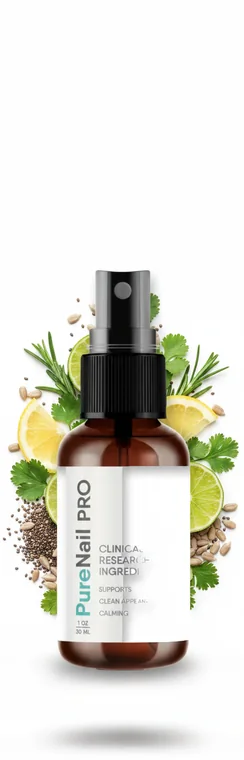
If you have researched undecylenic acid for toenail fungus, you have already met the most-recognized topical antifungal in the over-the-counter aisle without necessarily knowing its name. Undecylenic acid is a naturally derived, eleven-carbon unsaturated fatty acid, originally obtained from castor oil, and it is the labeled antifungal active in a long list of foot and nail products, including the undecylenic acid USP 5% listed on the PureNail label. Unlike the exotic botanicals that crowd the front of most bottles, this is a plain, well-characterized molecule that regulators have already placed in a defined category.
That category matters. The U.S. Food and Drug Administration recognizes undecylenic acid, and its zinc and calcium salts, as an antifungal active in its over-the-counter drug monograph for topical use on skin and the nail surface. In plain English, it is not a hopeful cosmetic extract; it is an ingredient the FDA has formally acknowledged as an antifungal for surface use. That regulatory status is the single biggest reason it remains the quiet workhorse of the category, even as flashier ingredients come and go.
Mechanically, it belongs to a well-studied family. As a medium-chain fatty acid, undecylenic acid inserts itself into the fungal cell membrane and disrupts its integrity, interfering with the organism's ability to hold its shape, regulate what passes in and out, and grow its filamentous hyphae. Laboratory work has repeatedly shown it inhibits and kills the dermatophytes, the Trichophyton species that cause most nail infections, as well as some yeasts. The action is real and reproducible in a dish. The interesting, honest questions are all about what happens once you move from a petri plate to an actual human toenail.
The evidence for undecylenic acid for toenail fungus
Here is where an honest guide has to slow down. The evidence for undecylenic acid for toenail fungus is genuinely mixed, and anyone who tells you a topical fatty acid reliably clears a stubborn nail infection is overselling. The gap is not about whether the molecule kills fungus, it clearly does in vitro, but about whether it can get to the fungus in a real nail. A toenail plate is one of the densest keratin barriers on the body, and the infection frequently lives underneath it and inside it, in the nail bed and matrix, precisely where a surface-applied liquid struggles to reach in meaningful concentration.
This is why the strongest, most reproducible results for any topical, undecylenic acid included, come from early, mild, surface-level cases: a little white or yellow patch near the nail's edge or on the top layer, on a nail that is still thin and largely intact. Caught there, before the infection has burrowed deep and thickened the plate, a consistently applied antifungal has a real shot at halting spread and letting clean nail grow out. On a thick, crumbling, fully involved nail, the same product is far more likely to slow and contain the problem than to fully clear it. Both outcomes are honest; they are just very different, and they depend almost entirely on how early you start.
It is also worth naming what undecylenic acid is not. In head-to-head terms, it does not match the cure rates reported for oral prescription antifungals such as terbinafine, which travel through the bloodstream and reach the nail bed from the inside, sidestepping the keratin-barrier problem entirely. For a severe, painful, spreading, or long-standing infection, the evidence favors seeing a clinician and discussing an oral agent, not layering on more topical. Undecylenic acid earns its place as accessible daily maintenance and as a reasonable first move on a mild nail, not as a replacement for medical care when the situation calls for it. Our fuller 2026 guide to nail fungus treatment options and the realistic ladder of care lays out where each rung fits.
The active this article is about, in a daily spray
PureNail lists undecylenic acid USP 5% as its labeled active, paired with tea tree, clove and conditioning oils in a fine-mist format built for the months-long, twice-daily routine the evidence actually calls for. See the full label and how it is positioned.
See the Official PureNail PageWhy the 5% concentration in PureNail is a deliberate trade-off
People often assume that with an antifungal, a higher percentage is automatically better. On a nail, that instinct is misleading, and understanding why explains the 5% figure on the PureNail label. The over-the-counter monograph recognizes undecylenic acid across a range of strengths, with some skin-focused products going as high as 25%. But strength is only half the equation; the other half is whether you can comfortably apply the product twice a day for the many months a nail takes to grow out. A concentrated, stinging liquid that you abandon after ten days will always lose to a tolerable strength you actually keep using through a full nail cycle.
Undecylenic acid USP 5% sits in that pragmatic middle. It supplies a recognized antifungal active at a level intended to stay comfortable on and around the nail and the delicate skin of the nail folds during long-term daily use, rather than one aggressive burst. In a formula like PureNail it is also not working alone: it is carried alongside botanical oils, tea tree, clove, lemongrass and manuka among them, plus conditioning oils and vitamin E that keep the surrounding skin from drying and cracking under repeated application. That supporting cast is part of what makes a modest concentration sustainable in practice. For a complete ingredient-by-ingredient walk-through, see our full breakdown of every ingredient on the PureNail label.

Realistic timelines: months, not weeks
The most common reason people conclude that undecylenic acid does not work is that they quit far too early, judged against a timeline the biology never allowed. Nails are slow. A toenail grows out at roughly a millimeter a month, and a big-toe nail can take nine to twelve months, sometimes longer, to fully replace itself. Because a fungal nail's damaged, discolored keratin does not un-discolor, the only way you see improvement is for healthy new nail to grow in from the base and push the affected portion out. That is a photo-finish measured in seasons, not a weekend project.
Set your milestones accordingly. In the first few weeks you are looking for containment: the affected area not obviously spreading, and the product becoming a settled part of your routine. By three to six months of consistent, twice-daily application on a nail you keep trimmed and gently thinned, the honest thing to watch is the new growth zone near the cuticle, whether the nail emerging there looks cleaner and clearer than the older, damaged tissue ahead of it. That band of healthy new growth, not an overnight transformation of the whole nail, is the real early signal that the routine is doing something. To see this timeline mapped out in detail for a related botanical, our piece on how long tea tree oil takes to show results on nails walks through the same slow-nail reality week by week.
Consistency, not intensity, is the variable that separates success from disappointment. Applying diligently every single day at a modest strength beats occasional heavy dosing, because a nail infection is a war of attrition against a slow-growing target. Miss days, stop when it looks a little better, or expect results by week two, and even a perfectly good active will appear to fail. Manage the expectation and you give the ingredient a fair chance to do the bounded but real job it can do.
Undecylenic acid versus tea tree oil and other actives
A frequent shopper question is whether undecylenic acid or tea tree oil is the better choice, and the honest answer is that the framing is slightly off, because the two occupy different regulatory and functional tiers. Undecylenic acid is a recognized OTC antifungal active with a defined monograph; tea tree oil is a botanical with supportive but less standardized human nail evidence, valued for its terpinen-4-ol content, its pleasant scent, and its conditioning feel. One is the labeled worker, the other is a well-liked botanical helper. Pitting them against each other misses how modern topical formulas are actually built.
In practice, thoughtful products combine them rather than choose. PureNail is a clear example: it leads with undecylenic acid USP 5% as the recognized active, then surrounds it with tea tree, clove, lemongrass and manuka oils for their traditional antifungal and soothing reputations, and conditioning oils to keep skin comfortable. You get the monograph-recognized worker plus the better-tolerated, nicer-to-use botanicals in one daily step. If you want to weigh the botanical side on its own terms, our review of what the evidence actually says about tea tree oil for nail care covers its strengths and its limits without the marketing gloss.
The broader point is that no single topical ingredient is a magic bullet for onychomycosis, and the ones that pretend to be should raise your guard. The realistic role of an OTC topical, whichever active it uses, is early-stage help and ongoing maintenance, applied consistently, with honest expectations, and with a clinician in the loop the moment a nail turns painful, thick, or fast-spreading.
Undecylenic acid does not fail because the molecule is weak. It disappoints when people expect a keratin-locked deep infection to clear in two weeks, and quit before healthy nail has had a single season to grow.
Where PureNail fits, and how to keep expectations honest
Measured against the evidence, PureNail is built around exactly the ingredient this article examines: undecylenic acid USP 5%, the FDA-recognized OTC antifungal active, delivered in a fine mist that is easy to apply to all ten nails and the surrounding skin twice a day, every day, for the long haul the biology demands. The format and the tolerable concentration are both aimed at the real bottleneck in topical nail care, which is not the chemistry but the follow-through. An active you will actually keep applying for nine months beats a harsher one you quit in three weeks.
What it is not, and what no honest publisher should imply, is a guaranteed cure or a replacement for medical care in a serious case. If your nail is thick, painful, lifting from the bed, rapidly spreading, or you are managing diabetes or poor circulation, that is a doctor or podiatrist conversation, and possibly an oral prescription, not a topical you buy online. Used within its lane, on early, mild, surface-level nails and as daily maintenance, undecylenic acid is a sensible, accessible, evidence-recognized choice. Read real user experiences in our roundup of honest PureNail reviews and whether the spray lives up to the claims, and if your nail is already thick and yellow, start with our practical guide to how to get rid of a thick yellow toenail before you buy anything.
Safety note: this article is general information, not medical advice. Undecylenic acid is recognized as an over-the-counter antifungal for surface use, but a topical product cannot diagnose your nail or guarantee a cure. Patch-test before regular use, keep it off broken skin, and never swallow it. See a doctor or podiatrist for any nail that is painful, thickening, lifting or spreading, and check with a clinician first if you are pregnant, nursing, diabetic or managing poor circulation.
Scientific references
- Leung A.K. et al. — Onychomycosis, StatPearls / NCBI Bookshelf
- U.S. FDA — Over-the-counter (OTC) drug monographs
- Mayo Clinic — Nail fungus: diagnosis and treatment
- Elabbasi A. et al. — Transungual penetration and antifungal activity of prescription and over-the-counter topical antifungals, Dermatology and Therapy (2024)
- American Academy of Dermatology — How to treat nail fungus
Related reading
Undecylenic acid 5%, formatted for the long routine
A recognized OTC antifungal active at a tolerable strength, in a fine-mist spray built for twice-daily use across a full nail-growth cycle. Check the current single and multi-bottle pricing on the official page.
Check Availability and Pricing