How to Get Rid of a Thick Yellow Toenail
Quick Answer: How do you get rid of a thick yellow toenail?
To get rid of a thick yellow toenail, first treat the likely cause, usually a fungal infection: trim and gently thin the nail, keep feet dry, and apply a recognized OTC antifungal consistently on mild cases, while seeing a doctor for thick, painful or spreading nails. A new clear nail then grows out over nine to twelve months, so patience is part of the plan.
- Prep the nail: trim short and thin the surface so treatment can reach the fungus.
- Deny it moisture: dry feet, moisture-wicking socks, rotated shoes.
- Escalate honestly: OTC topicals for mild cases, a doctor for severe ones.
Why your toenail turned thick and yellow
Before you can figure out how to get rid of a thick yellow toenail, it helps to know what you are actually fighting, because the answer shapes every step that follows. In the large majority of cases, a thick, yellow, crumbly toenail is onychomycosis, a fungal infection of the nail. Fungi are opportunists that feed on keratin, the tough protein your nail is made of. As they colonize the nail plate and the bed beneath it, they thicken the nail, lift it, and stain it a dull yellow, brown or chalky white as debris accumulates underneath. The warm, dark, sometimes damp environment inside a shoe is close to ideal for them.
Fungus is the usual suspect, but it is not the only one, and honest guidance names the alternatives. Old trauma, stubbing the toe or years of pressure from tight shoes or running, can permanently thicken and discolor a nail. Psoriasis can pit, thicken and yellow nails in a way that mimics fungus closely. Simple age-related thickening happens too. These look-alikes matter because the fixes differ, and it is genuinely hard to tell them apart by eye, which is a large part of why a persistent or worsening nail deserves a clinician's confirmation rather than a guess. Certain nutrient deficiencies that are linked to weaker nails and fungal vulnerability can also make the plate more susceptible in the first place, which is worth understanding if this keeps recurring.
Step one: prepare the nail so treatment can reach it
The most overlooked step in getting rid of a thick yellow toenail is mechanical, not chemical, and skipping it is why many people conclude nothing works. A thickened nail is a fortress: the same density that makes it look bad also blocks any topical from reaching the fungus living within and beneath it. So before you apply anything, reduce the barrier. Trim the nail as short as is comfortable, straight across, and then gently thin the thickened surface, an emery board or a dedicated nail file works, filing a little of the top layer down so the plate is thinner and more porous. Do this carefully and never to the point of pain or bleeding.
Thinning does two things at once. It lets a topical antifungal actually penetrate toward the infection instead of sitting uselessly on a keratin wall, and it removes a chunk of the discolored, fungus-laden material immediately, which improves both the odds and the appearance. Keep a file dedicated to that nail and clean it after each use so you are not seeding other nails. Pair this with basic foot hygiene: wash and, crucially, thoroughly dry your feet, especially between the toes, because leftover moisture is exactly what the fungus wants. This unglamorous prep is the foundation every later step is built on.
Step two: deny the fungus the conditions it loves
Treatment fails more often from a hospitable environment than from a weak product, so half the battle is making your feet an inhospitable place for fungus to thrive. The organism wants warmth, darkness and moisture, and you can take away the moisture. Wear moisture-wicking socks, changed daily or more often if your feet sweat, and choose materials that pull dampness away from the skin rather than trapping it. Rotate your shoes so no single pair stays perpetually damp inside; giving each pair a full day or two to dry out between wears matters more than people expect. Antifungal foot powder or spray inside shoes can help keep them dry.
Guard against reinfection and spread while you are at it. Fungus travels, so wear sandals in communal showers, pool decks and locker rooms, do not share nail clippers or files, and disinfect the tools you use on the affected nail. If you have athlete's foot, the skin infection between the toes, treat it too, since it is frequently the same organism and an untreated reservoir will keep re-seeding the nail. None of this is glamorous, and none of it alone will clear an established nail, but it is the difference between a treatment that gains ground and one that runs in place. For the wider strategy, our 2026 guide to nail fungus treatment options and the full ladder of care puts these habits alongside the medical choices.
A daily topical for the mild-case step
On an early, thinned nail, PureNail lists undecylenic acid USP 5%, a recognized OTC antifungal active, in a fine mist that is easy to apply twice a day across the many months a nail takes to grow out. See the label and how it is positioned.
See the Official PureNail PageStep three: match the treatment to the severity
Now the actual treatment, and the single most important idea is to be honest about severity, because the right rung of the ladder depends entirely on how far the infection has gone. Over-the-counter topicals suit mild, early, surface-level cases: a thin nail with limited discoloration, caught before it thickened and crumbled. On that kind of nail, a recognized over-the-counter antifungal such as undecylenic acid, applied consistently twice a day to a trimmed and thinned nail, has a real chance of halting spread and letting clean nail grow in. This is exactly the situation topical products are built for, and where daily maintenance earns its keep. Our deep dive on what the evidence shows about undecylenic acid for toenail fungus covers how that active works and its honest limits.
A thick, painful, widely discolored, lifting or long-standing nail is a different animal, and pretending a topical will fix it is where people waste months. Severe or spreading onychomycosis usually needs a doctor, and often an oral prescription antifungal such as terbinafine, which reaches the nail bed through the bloodstream rather than fighting through the keratin barrier from outside. A podiatrist can also debride, professionally thin or partially remove, a badly affected nail, and in some cases discuss laser or other options. There is no shame in escalating; matching the tool to the severity is the whole skill, and using a mild topical on a fortress nail simply loses time the infection uses to dig in.

The realistic ladder, and how long each step takes
Here is the whole approach as a single ladder, from the mildest DIY steps to professional care, so you can see where your nail sits and what to expect. Move up a rung when a lower one is clearly not enough, and do not skip the prep and hygiene steps just because they are not exciting, they multiply the effectiveness of everything above them.
| Step | Best for | Realistic timeline |
|---|---|---|
| Trim, thin and dry the nail | Every case, always first | Ongoing, immediate visual help |
| Moisture-wicking socks, rotated shoes | Prevention and support | Ongoing habit |
| OTC antifungal (undecylenic acid) | Mild, early, thin nails | 3–6+ months of daily use |
| See a doctor or podiatrist | Thick, painful or spreading nails | Assessment, then a plan |
| Oral prescription (e.g. terbinafine) | Moderate to severe cases | Weeks of pills, months to grow out |
| Debridement, laser, other options | Stubborn or complicated nails | Clinician-directed |
Whatever rung you are on, the growth-out timeline is the same and it is slow: a big-toe nail takes roughly nine to twelve months, sometimes longer, to fully replace itself, because toenails grow only about a millimeter a month and the damaged portion never becomes clear again, it has to be pushed out and replaced by healthy new nail. Judge progress by the band of clean growth near the cuticle, not the old damaged tip, and resist the urge to stop the moment it looks a little better, since that is the single most common reason a nail relapses.
Getting rid of a thick yellow toenail is a photo-finish measured in seasons, not a weekend fix. The people who succeed are the ones who prep the nail, deny the fungus moisture, pick the right rung, and simply do not quit before a full nail has grown out.
Two myths that waste time, and where a topical honestly fits
A couple of persistent myths deserve dismantling, because they cost people months. The first is the vinegar-and-bleach-soak school of thought: the idea that a strong home chemical soak will dissolve the problem. Harsh soaks mostly irritate or damage the surrounding skin without reliably reaching the fungus in the nail, and aggressive bleach in particular can burn. The second myth is the opposite error, that any over-the-counter product is automatically useless and only pills work. That is too cynical; on a genuinely mild, early nail, consistent topical care with a recognized active is a reasonable and evidence-supported first step. The truth sits between the extremes, and it depends on severity.
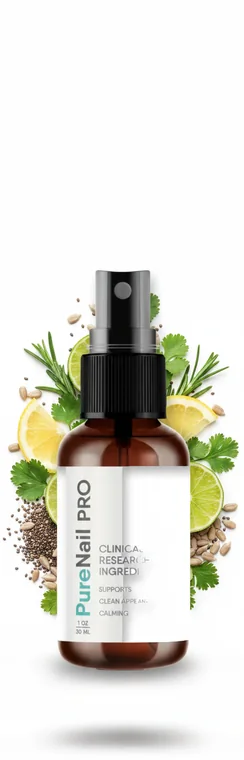
So where does a product like PureNail honestly fit? On the mild-case and maintenance rungs. It lists undecylenic acid USP 5%, a recognized OTC antifungal active, in a fine-mist format that makes twice-daily application to a thinned nail easy enough to actually keep up for the long haul the biology demands, alongside conditioning botanicals that keep the surrounding skin comfortable. It is not a substitute for a doctor when a nail is thick, painful or spreading, and no honest publisher should imply otherwise. Used within its lane, as early-stage help and daily upkeep, it is a sensible tool. To gauge how it performs for real people, read our roundup of honest PureNail reviews and whether the spray lives up to the claims before deciding.
Safety note: this article is general information, not medical advice, and a discolored nail can have several causes that look alike. See a doctor or podiatrist if a nail is painful, thick and lifting, spreading, not improving after months of care, or if you have diabetes, poor circulation or a weakened immune system. Get a single dark streak or sudden color change checked promptly. Patch-test any essential-oil product first, keep it off broken skin, and never swallow it.
Scientific references
Related reading
Daily upkeep for the long grow-out
A thinned nail, dry feet and a recognized OTC antifungal, applied every day across a full nail-growth cycle, is the honest mild-case routine. Check the current single and multi-bottle pricing on the official page.
Check Availability and Pricing