Reading the PureNail Label: Why Only One of 17 Ingredients Has a Printed Amount
Quick Answer: What does the PureNail label actually disclose?
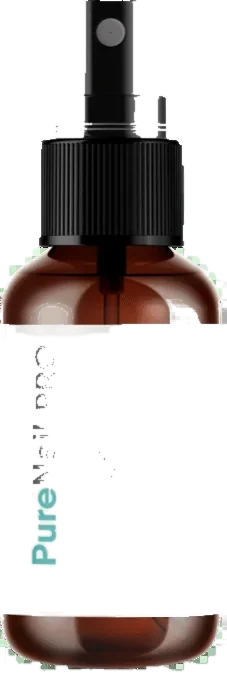
The printed PureNail bottle label lists 17 ingredients. Exactly one carries a measured amount: Undecylenic Acid USP at 5%. The remaining 16 botanical and carrier oils are named but not quantified anywhere we could find. Outside sales pages describe the formula in contradictory ways, some calling it a "proprietary blend," another saying the opposite, and one even lists only 16 ingredients rather than the label's 17. We treat the printed label as the primary source and flag every place it disagrees with an outside page rather than guessing which is right.
- One disclosed amount: Undecylenic Acid USP 5%, the only figure on the label.
- Sixteen undisclosed amounts: every other listed ingredient, no percentage or measured quantity given.
- An unresolved conflict: "proprietary blend" on one page, "no proprietary blends" on another, neither showing amounts.
Why label reading matters more than the sales copy
Most people shopping for a nail-care product read the sales page first and the label second, if they read the label at all. That is understandable, sales pages are built to be read quickly, and labels are built to satisfy a regulator, not a browsing shopper. But the label is the one document a company is legally accountable for printing accurately on the physical product, and it is where the actual ingredient list, form and directions live. Sales copy can be rewritten overnight; a printed bottle in a customer's hand cannot. That is why this article works from the label first, and treats sales-page claims as claims to be checked rather than facts to be repeated.
PureNail is worth this treatment because it is a useful, specific example of a common gap: a product with one clearly disclosed active ingredient and a long list of supporting ingredients that carry no disclosed amount at all. That is not automatically a red flag, plenty of legitimate topical cosmetics are formulated this way, but it does mean a shopper who wants to judge the formula's strength has only one number to actually judge.
What is printed on the PureNail label, in order
The label's ingredients line, transcribed exactly as printed, reads: Undecylenic Acid USP (5%), Mineral Oil, Sweet Almond (Prunus amygdalus dulcis) Oil, Organic Flaxseed (Linum usitatissimum) Oil, Tea Tree (Melaleuca alternifolia) Oil, Aloe Vera Leaf (Aloe barbadensis) Extract, Canola (Brassica napus L.) Oil, Tocopheryl Acetate (Vitamin E), Walnut (Juglans regia) Oil, Menthol, Camphor (Cinnamomum camphora) Oil, Clove Bud (Eugenia caryophyllus) Oil, Jojoba (Simmondsia chinensis) Oil, Chia (Salvia hispanica) Oil, Lemongrass (Cymbopogon citratus) Oil, Lavender (Lavandula angustifolia) Oil, and Manuka (Leptospermum scoparium) Oil.
Count them and that is 17 items. Only the first one, undecylenic acid, has a number attached to it: USP grade, 5%. Every other ingredient on that list, from mineral oil at position two to manuka oil at position seventeen, is named with no percentage, no milligram figure, and no other measured quantity given anywhere on the packaging we reviewed or on the pages we checked.
The one number: Undecylenic Acid USP 5%
Undecylenic acid is a fatty acid that is recognized in the FDA's over-the-counter drug monograph system as a topical antifungal ingredient for skin and nail-surface use, which is presumably why it is the one ingredient the label bothers to quantify: it is the closest thing on this list to a regulated active. We have covered the evidence behind that ingredient specifically in our companion piece on undecylenic acid for toenail fungus, so we will not repeat the science here. For this article, the point is narrower: 5% is the only disclosed number on the entire label, and everything below it in this article is about the 16 ingredients that do not have one.
Read the full printed label for yourself
Rather than rely on any summary, including this one, look at the complete PureNail label and directions on the official page before you decide.
View the Official PureNail PageThe 16 ingredients with no printed amount
This is the part of the label that is easy to skim past. Mineral oil, sweet almond oil, organic flaxseed oil, tea tree oil, aloe vera leaf extract, canola oil, tocopheryl acetate (vitamin E), walnut oil, menthol, camphor oil, clove bud oil, jojoba oil, chia oil, lemongrass oil, lavender oil and manuka oil are all named on the label. None of them carries a percentage, a milligram amount, a drop count, or any other measured quantity. That is true on the bottle, and it is true on every sales or affiliate page we checked as well, none of which print amounts for these 16 ingredients either, whatever they claim about disclosure.
To be clear about what this does and does not mean: an unquantified ingredient is not automatically a weak or token amount. Cosmetic and topical products routinely list ingredients without percentages, and ingredient order on a label is often, though not always, a rough proxy for relative quantity, since ingredients are conventionally listed in descending order of concentration. Mineral oil sitting second on the list, right after the one active, is consistent with it being a primary carrier oil by volume, which is an ordinary role for a base oil in a spray formula. What a shopper cannot do, with no printed amounts, is verify any specific figure for tea tree oil, clove oil, or any of the other individually named botanicals. If a sales page implies a specific one of them is present in a meaningful, quantified amount, that implication is not something the label itself supports.
The "proprietary blend" conflict
Here the sourcing gets genuinely contradictory, and we want to show both sides rather than resolve it for you. One seller page describes the formula as "an optimally dosed proprietary blend of oils and vitamins" and elsewhere as "a proprietary formula of strong ingredients." A separate affiliate page states the opposite: "Every ingredient and amount clearly disclosed – no proprietary blends." Both statements cannot be straightforwardly true of the same product description, and neither page actually prints amounts for the 16 unquantified ingredients, which is the detail that would let a shopper judge either claim. We are reporting this as an unresolved conflict between two outside sources, not endorsing either description, and we would treat any claim of full ingredient-and-amount disclosure with real skepticism until a page actually shows the amounts.
Two outside pages disagree about whether this is a "proprietary blend" or the opposite of one, and neither one actually prints the amounts that would settle the question. That gap, not either claim, is the fact worth knowing.
The 17-item label vs. the 16-item sales page
The second conflict is a plain counting discrepancy. The printed bottle label we reviewed lists 17 ingredients in this order: Undecylenic Acid USP 5%, Mineral Oil, Sweet Almond Oil, Organic Flaxseed Oil, Tea Tree Oil, Aloe Vera Leaf Extract, Canola Oil, Tocopheryl Acetate (Vitamin E), Walnut Oil, Menthol, Camphor Oil, Clove Bud Oil, Jojoba Oil, Chia Oil, Lemongrass Oil, Lavender Oil, and Manuka Oil. A sales/affiliate page we checked lists the same core ingredients in a different order and omits one: Mineral Oil, Sweet Almond Oil, Organic Flaxseed Oil, Tea Tree Oil, Aloe Vera, Canola Oil, Vitamin E, Walnut Oil, Camphor Oil, Clove Bud Oil, Jojoba Oil, Chia Oil, Lemongrass Oil, Lavender Oil, Menthol, and Undecylenic Acid, with no manuka oil anywhere on that page and no 5% figure printed either.
That is a 17-item list versus a 16-item list, missing the same ingredient, manuka oil, and missing the one disclosed amount. We do not know why the counts differ; it could be an outdated sales page, a reformulation not reflected on one side, or simple copy error. What we can say is that when a printed product label and an outside marketing page disagree on what is actually in the bottle, the printed label on the physical product is the more reliable source, and that is the version we work from in our other PureNail ingredient coverage, including our full label breakdown.
| Source | Ingredient count | Includes manuka oil? | Prints the 5% figure? |
|---|---|---|---|
| Printed bottle label | 17 | Yes | Yes |
| Outside sales/affiliate page | 16 | No | No |
What the printed directions say, and a second conflict worth flagging
The label prints a directions line as well as the ingredients list, and it is worth reading alongside the amount gap above because it is another spot where the bottle and the outside pages do not fully agree. The bottle itself is a 1 oz / 30 ml spray, and its printed directions say to apply twice daily, once in the morning and once in the evening, ideally right after a warm shower: hold the bottle 6 to 8 inches from the skin or nails, spray a thin layer over the area, and let it dry completely before putting on socks or shoes. That is a specific, repeatable routine, and it is the version we treat as authoritative because it is the version printed on the product itself.
Outside pages describe the routine a little differently. A seller FAQ we reviewed tells buyers to apply it "every day, after you shower" and to spray "all over your feet," without specifying twice daily, and a separate affiliate page instructs users to "spray directly onto clean, dry nails and surrounding skin" on a daily basis. None of those descriptions directly contradicts the label's twice-daily instruction, applying once a day is compatible with also applying twice a day on other occasions, but none of them actually repeats it either, and "all over your feet" is a broader area than "the nails and surrounding skin" that the label and most other pages describe. As with the ingredient-count and proprietary-blend conflicts above, we are not going to guess which routine is correct; we simply note that the printed label is the more specific and more authoritative source, and that a buyer following only a seller FAQ would end up with a less precise routine than the one actually printed on the bottle.
The seller's own checkout page also frames its 2-bottle pack as a "60 day supply," which works out to roughly 30 days of use per 1 oz bottle under whatever application routine a buyer actually follows. Neither the label nor the pages we checked print an exact spray count per bottle or per application, so that 30-day figure is a rough usage estimate from the seller, not a number we can independently verify against a printed spray count.
What is not stated at all
Beyond the amount gap, several things simply are not stated anywhere we could find: the number of sprays per bottle or per application, any published clinical study on the finished product, independent third-party testing, and manufacturer detail beyond a distribution address. None of that is unusual for a topical cosmetic-style spray, and none of it is presented here as evidence of wrongdoing, it is presented because a label-reading article should say plainly where the trail runs out rather than filling the gap with a confident-sounding guess. If you are weighing whether the formula's supporting oils are individually backed by research, independent of what the label discloses about amounts, our companion piece on the lesser-covered PureNail oils and what research says about them looks at that literature directly.
What this article is and is not: this is a reading of the printed label and a comparison against outside pages, not a lab analysis and not medical advice. We have not independently verified the label against a certificate of analysis. PureNail is a topical, external-use-only product; it is not described here as a cure or treatment for nail fungus or any infection. See a doctor or podiatrist for any nail that is painful, thickening, lifting or changing color.
Scientific references
Related reading
One disclosed amount, sixteen undisclosed, one label worth reading yourself
See the full printed ingredients list, directions and pack pricing on the official page before you order.
Order PureNail