Who Should Not Use a Topical Nail and Skin Spray Like PureNail
Quick Answer: who should check with a doctor before using PureNail?
PureNail's own label and the seller's and affiliate's advice point to several groups who should speak to a doctor before use: anyone pregnant or breastfeeding, parents considering it for a child, anyone with diabetes, a weakened immune system, broken or infected skin, or a diagnosed nail or skin condition, and anyone on prescription medication or managing another medical condition. We could not find published clinical safety data specific to this product for any of these groups. That absence of data, not a guarantee either way, is the honest summary.
- Label cautions: external use only, avoid eyes, do not ingest, discontinue if irritation occurs.
- Not stated anywhere we found: safety data for pregnancy, breastfeeding or children.
- Seller and affiliate advice: show the bottle to a doctor if on prescription drugs, managing a condition, or with diabetes, a weak immune system, broken/infected skin or a diagnosed nail or skin condition.

Why "who should not use it" is a real question, not just boilerplate
Every topical product carries a version of this section somewhere, and it is easy to skim past as generic legal cover. We are treating it as a real question here because PureNail's own sourcing gives specific, somewhat inconsistent guidance about who should be cautious, and because there genuinely is no published safety data on the finished product for several groups people commonly ask about. Saying "consult a doctor" without saying why, or for whom, is not much use to a shopper trying to decide. This article tries to be specific about what is actually printed, what the seller and affiliate pages themselves advise, and, just as importantly, what nobody has stated at all.
One thing worth being clear about up front: PureNail is a topical, external-use-only mist spray, not a capsule and not something meant to be swallowed. It is not described here, and should not be understood, as a cure or treatment for nail fungus or any other infection. Everything below concerns using a topical botanical-oil spray on skin and nails, not an ingested product.
What the label itself says about safe use
The printed caution on the PureNail bottle is direct: for external use only; avoid contact with eyes; do not ingest; if swallowed, drink water and seek medical attention immediately; discontinue use if irritation occurs. That is a fairly standard caution set for a topical essential-oil-based spray, and it tells you two important things by itself. First, this product is meant to stay on the outside of the body, specifically nails and surrounding skin, not near the eyes and never in the mouth. Second, the label anticipates that irritation is a realistic possibility, which is exactly why it tells users to stop if it happens rather than push through it.
That second point is not a small detail. A spray built from roughly a dozen and a half essential and carrier oils, several of them, like clove bud oil and camphor oil, individually recognized as potent enough to cause skin reactions in some people, is a reasonable candidate for irritation in sensitive users even when every ingredient is otherwise unremarkable. Camphor specifically also carries a well-documented toxicity risk if it is ingested rather than applied topically; case reports and critical-care literature describe serious poisoning in children from camphor-containing products taken by mouth or misused traditionally, which is precisely the scenario the label's "do not ingest" and "keep away from" cautions exist to prevent.1
Read the full label and cautions yourself
See the complete printed directions and cautions on the official page before deciding if this product is right for you.
View the Official PureNail PageGroups the seller and affiliate pages themselves flag
Beyond the printed label, the seller's own page advises showing the bottle to a doctor if you are taking prescription drugs or managing a medical condition, before starting use. That is the seller's own recommendation, not an outside requirement, and it is worth taking at face value: if you are on regular medication or under a doctor's care for anything, a two-minute conversation before adding a new topical product costs little and closes a real gap in what is otherwise unstated.
Separately, the affiliate page advises that people with diabetes, a weak immune system, broken or infected skin, or a diagnosed nail or skin condition should see a doctor first rather than self-treating with the spray. Each of those has an obvious rationale even without product-specific data: diabetes and a weakened immune system are both independently associated with slower wound healing and higher infection risk, so introducing a new topical product to compromised skin, or skin near a compromised nail, is exactly the kind of decision worth a clinician's input rather than guesswork. Broken or infected skin is a caution that applies to nearly any topical product, since intact skin is the barrier most over-the-counter cosmetics are formulated to sit on top of, not penetrate through.
Pregnancy, breastfeeding and children: what is and is not stated
This is the area where we want to be most careful not to overstate either direction. The seller describes the product as "designed for all ages and medical conditions," which reads as reassuring, but it is a marketing description, not a citation to a safety study, and it sits awkwardly next to the same seller's advice to show the bottle to a doctor if you have a medical condition. We could not find any published clinical safety data on this specific finished product for pregnancy, breastfeeding, or pediatric use. That is not the same as evidence of harm, an absence of data is simply an absence of data, but it does mean nobody should read "designed for all ages" as equivalent to "tested and found safe for all ages." If you are pregnant, breastfeeding, or considering this for a child, the honest position is that this specific product has not been studied for you, and a conversation with a doctor or pediatrician before use is the more cautious path.
Some of the individual ingredients on the label have their own literature worth knowing about in this context, separate from the finished product. Tocopheryl acetate (vitamin E) is common and generally well tolerated, but it is also a recognized, if uncommon, cause of allergic contact dermatitis; a large North American Contact Dermatitis Group review of patch-test data found a small but real rate of positive reactions to tocopherol and tocopherol acetate among people tested for suspected contact allergy.2 That does not mean vitamin E is unsafe in general, it is one of the more benign ingredients on this label, but it is a reminder that "natural" and "hypoallergenic" are not the same thing, and it supports the same general precaution the label already gives: patch-test, and stop if irritation occurs.
The honest answer for pregnancy, breastfeeding and children is not "yes" or "no." It is that no published safety data on this specific product exists for those groups, and the label's own cautions were written with that gap in mind.
Why patch-testing matters for a formula like this one
Neither the seller page nor the affiliate page we checked spells out a formal patch-test step, but it is a reasonable precaution given what is actually in the bottle: a spray built from roughly a dozen and a half essential and carrier oils, several of them, such as clove bud, camphor and menthol, individually recognized in the dermatology literature as more likely than a plain moisturizer to trigger irritation or a contact reaction in sensitive skin. A simple patch test costs little: apply a small amount to a small area of skin, such as the inside of the forearm, and wait 24 to 48 hours before applying it more broadly to nails and surrounding skin. If redness, itching, burning or swelling develops at any point, that is the label's own signal to discontinue use, not to push through it. This is ordinary practice for any new essential-oil-based topical, not a PureNail-specific requirement, and it is a sensible extra step particularly for the groups discussed above, since none of them have published safety data on this specific product to fall back on.
It is also worth separating two different kinds of reaction a patch test can catch. An irritant reaction, redness or stinging from a strong-smelling oil like camphor or clove bud, can happen to almost anyone at a high enough concentration and usually resolves once the product is stopped. An allergic contact reaction is different: it develops in a smaller subset of people who have become sensitized to a specific compound, sometimes only after repeated exposure, and can appear as a delayed rash rather than an immediate sting. The patch-test data on tocopherol and tocopherol acetate discussed above is this second kind of reaction, a genuine but uncommon allergy, not a general warning that vitamin E is harsh. Knowing which kind of reaction you are watching for during a patch test, immediate irritation versus a rash that shows up a day or two later, makes the test more useful than simply glancing at the skin once and moving on.
A practical caution checklist
Speak to a doctor first if you are…
Pregnant or breastfeeding; considering it for a child; managing diabetes; have a weakened immune system; have broken, infected or actively diseased skin around the nail; have a diagnosed nail or skin condition; or are taking prescription medication or managing another medical condition, per the seller's own advice.
Follow the label's own cautions
External use only; avoid the eyes; do not ingest, and seek medical attention immediately if swallowed; discontinue use and reassess if irritation, redness, itching or burning develops.
None of this is a claim that PureNail is unusually risky compared with other topical botanical-oil products; most of these cautions would apply to any spray built from a dozen and a half essential and carrier oils. The point of this article is simply to state, plainly and without either alarm or reassurance, what the label says, what the seller and affiliate pages themselves advise, and what safety data genuinely has not been published, so that the people in these specific groups can make an informed decision rather than an assumed one.
Medical disclaimer: this article is general information based on the product label and the seller's and affiliate's own published advice, plus general dermatology and toxicology literature on individual ingredients. It is not medical advice and does not replace an individual consultation. If you are pregnant, breastfeeding, managing diabetes, immunocompromised, have broken or infected skin, a diagnosed nail or skin condition, or take prescription medication, speak with a doctor before using any new topical product, including this one.
Scientific references
- Kumar S, Kavitha TK, Angurana SK — Kerosene, camphor, and naphthalene poisoning in children, Indian Journal of Critical Care Medicine (2019)
- Warshaw EM, et al. — Patch testing with tocopherol and tocopherol acetate: the North American Contact Dermatitis Group experience, 2001 to 2016, Dermatitis (2021)
- U.S. FDA — Over-the-counter (OTC) drug monographs
Related reading
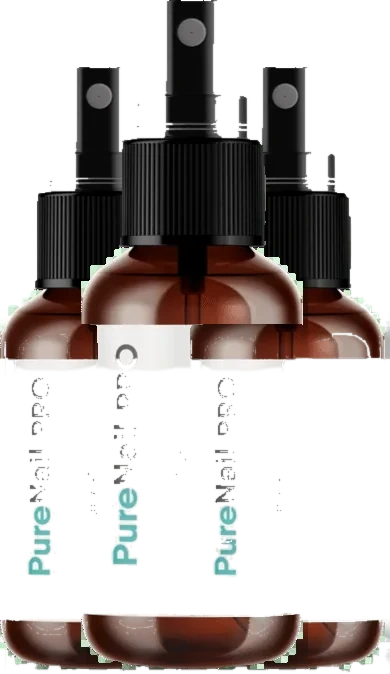
Read the full cautions before you decide
See the complete label, directions and pack pricing on the official page, and talk to a doctor first if any of the cautions above apply to you.
Order PureNail