The Other Oils in PureNail: What Research Says About Aloe Vera, Vitamin E, Lavender and Manuka Oil
Quick Answer: what does the research say about these seven oils?
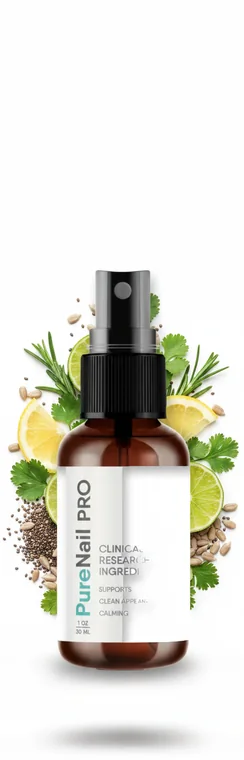
Our other PureNail articles have already covered undecylenic acid, tea tree oil, oregano oil, jojoba oil, cuticle oil, biotin and zinc in depth. This piece covers the label ingredients that have not had a dedicated deep dive yet: Aloe Vera Leaf Extract, Tocopheryl Acetate (Vitamin E), Lavender Oil, Manuka Oil, Clove Bud Oil, Lemongrass Oil and Chia Oil. Each has published research behind it, ranging from human clinical data (chia seed oil, aloe vera) to laboratory antimicrobial studies (clove, lemongrass, manuka) to dermatology reviews (vitamin E, lavender). None of the amounts used in PureNail are printed on the label, so what follows describes what each ingredient has shown in independent research generally, not a tested effect of this specific formula.
- Best human clinical evidence: aloe vera (burns) and chia seed oil (topical pruritus).
- Strong laboratory antimicrobial data: clove bud, lemongrass and manuka oils.
- Established dermatology role: vitamin E as a topical antioxidant and skin conditioner.
Why these seven, and not the whole label
Our blog already has dedicated, deep coverage of several PureNail ingredients: tea tree oil, oregano oil, jojoba oil, cuticle oil in general, biotin, zinc, and undecylenic acid, the one ingredient with a printed amount. Rather than repeat that ground, this article picks up the seven label ingredients that have not had their own deep dive: aloe vera leaf extract, tocopheryl acetate (vitamin E), lavender oil, manuka oil, clove bud oil, lemongrass oil and chia oil. Each of these is named on the printed PureNail label. None carries a printed amount, a gap we cover in detail in our label-reading article. What we can responsibly do here is summarize what independent, PubMed-indexed research has found about each ingredient on its own, in whatever form it was actually studied, and keep that clearly separate from any claim the seller makes about the finished PureNail formula.
Aloe vera leaf extract
Aloe vera is one of the most heavily researched botanicals in topical skincare, which makes it worth taking seriously rather than dismissing as filler. A 2021 pharmacodynamics review in Phytotherapy Research describes aloe vera's acemannan and related polysaccharides as having demonstrated wound-healing, anti-inflammatory and moisturizing activity across laboratory and clinical studies, with mechanisms including support for collagen synthesis and modulation of inflammatory signaling in skin.1 On the clinical side, a 2022 systematic review and meta-analysis in Advances in Skin & Wound Care found that aloe vera preparations were associated with faster healing for second-degree burns compared with some conventional dressings across the pooled trials it examined.2 That is meaningfully strong evidence for aloe vera as an ingredient class, though it describes burn wound care specifically, not a nail-and-cuticle spray, and it says nothing about the concentration used in PureNail, which is not printed.
Tocopheryl acetate (vitamin E)
Vitamin E's role in dermatology is well established: it is a lipid-soluble antioxidant that helps protect skin cell membranes from oxidative stress, and tocopheryl acetate is the more stable, less easily oxidized ester form commonly used in topical formulations for that reason. A 2026 review in Clinics in Dermatology summarizes vitamin E's antioxidant and skin-conditioning roles across a range of topical and cosmetic applications.3 It is worth pairing that with the other side of the picture: a large North American Contact Dermatitis Group analysis of patch-test data from 2001 to 2016 found that tocopherol and tocopherol acetate produced positive allergic patch-test reactions in a small but consistent share of people tested for suspected contact allergy.4 Neither finding is alarming on its own, vitamin E remains one of the more broadly tolerated ingredients in this formula, but the honest picture includes both its established conditioning role and its documented, if uncommon, potential to trigger a reaction in sensitized individuals.
See the full ingredient list on the label
Check the complete printed PureNail ingredients list and directions on the official page before you order.
View the Official PureNail PageLavender oil
Lavender oil is best known for its studied calming and sleep-related effects, but its dermatological profile is also documented. A frequently cited pharmacology review in Phytotherapy Research summarizes lavender essential oil's laboratory-demonstrated antimicrobial and antifungal activity, alongside its sedative, analgesic and anti-inflammatory properties reported across various studies.5 That antimicrobial activity is in-vitro, meaning it was shown against microorganisms in laboratory conditions, not in a clinical trial testing lavender oil on human nail or skin infections. For a nail-and-cuticle formula, lavender's more defensible role is as a mild, well-studied botanical with soothing and scent properties alongside modest laboratory-level antimicrobial activity, rather than a primary antifungal ingredient in its own right.
Manuka oil
Manuka oil, steam-distilled from Leptospermum scoparium, a New Zealand relative of the tea tree plant, has real laboratory antimicrobial data behind it. A 2022 study in the Italian Journal of Food Safety tested manuka essential oil against Listeria monocytogenes and Staphylococcus aureus and found both antimicrobial and anti-biofilm activity, meaning the oil not only inhibited these bacteria but also disrupted the protective biofilm layers some bacteria form.6 That is direct, ingredient-specific antimicrobial evidence, though it was generated against food-safety-relevant bacteria in a laboratory setting, not in a clinical trial on human nails or skin. Worth flagging here again: manuka oil is one of the ingredients caught in the label-versus-sales-page conflict we document in our label-reading article, present on the printed bottle label but absent from at least one outside sales page's ingredient list entirely.
Clove bud oil
Clove bud oil's active constituent, eugenol, has some of the more direct antifungal laboratory evidence of any botanical on this label. A 2009 study in the Journal of Medical Microbiology tested clove essential oil from Syzygium aromaticum against Candida, Aspergillus and dermatophyte fungal species and reported meaningful antifungal activity across those organisms.7 Dermatophytes are the specific class of fungi most often responsible for nail and skin fungal infections, which makes this a relevant laboratory finding for a nail-care context. As with the other botanicals here, this is cell-culture and laboratory evidence, not a clinical trial of clove oil, or of PureNail, on human nail infections, and clove oil is also one of the more potent essential oils in terms of irritation potential, which is part of why formulators tend to use it as a supporting ingredient rather than the primary active.
Lemongrass oil
Lemongrass oil's antifungal activity centers on its major compound, citral. A 2008 study in the Brazilian Journal of Infectious Diseases tested lemongrass oil and isolated citral against Candida species and found meaningful antifungal activity for both the whole oil and the isolated compound.8 Candida is a yeast rather than a dermatophyte mold, so this evidence speaks most directly to yeast-type fungal activity rather than the dermatophyte fungi behind most toenail fungus cases, a distinction worth keeping in mind when weighing lemongrass's role in a nail formula. It remains a legitimate, laboratory-supported antimicrobial botanical, just not a substitute for the dermatophyte-specific evidence behind ingredients like undecylenic acid or tea tree oil.
Chia oil
Chia seed oil, from Salvia hispanica, has the most direct human clinical data of any ingredient in this group besides aloe vera. A 2010 study in the Annals of Dermatology tested topical chia seed oil on pruritus, meaning itching, in patients with end-stage renal disease as well as healthy volunteers, and found it was effective at reducing itch symptoms in both groups.9 A separate 2018 review in Planta Medica summarizes chia seed oil's broader therapeutic profile, including its high omega-3 alpha-linolenic acid content and its skin-conditioning and anti-inflammatory properties reported across the literature.10 For a nail-and-cuticle spray applied to skin daily, this is genuinely encouraging: an actual human topical trial, not just a laboratory finding, supporting chia oil's role as a skin-calming carrier ingredient.
| Ingredient | Type of evidence found | Study population |
|---|---|---|
| Aloe vera leaf extract | Systematic review/meta-analysis, clinical burn trials | Human, burn wound patients |
| Tocopheryl acetate (vitamin E) | Dermatology review; separately, patch-test allergy registry | Human, general and contact-allergy patients |
| Lavender oil | Laboratory antimicrobial/antifungal activity | In-vitro |
| Manuka oil | Laboratory antimicrobial and anti-biofilm activity | In-vitro (bacterial strains) |
| Clove bud oil | Laboratory antifungal activity vs. dermatophytes | In-vitro |
| Lemongrass oil | Laboratory antifungal activity vs. Candida | In-vitro |
| Chia oil | Clinical trial on topical pruritus | Human, ESRD patients and healthy volunteers |
Aloe vera and chia oil have real human clinical data behind them. Lavender, manuka, clove and lemongrass have solid laboratory antimicrobial evidence. All of that is evidence for the ingredient, not a tested claim about PureNail's finished, unquantified blend.
What this does and doesn't tell you about PureNail itself
It is worth being precise about the limits of this kind of ingredient-level research. Every study cited above tested the named ingredient, at a specific, disclosed concentration, in its own experimental context, whether that is a burn dressing trial, a bacterial culture plate, or a topical itch study. None of them tested PureNail as a finished product, and since the label does not print amounts for any of these seven ingredients, there is no way to know whether any of them is present in this spray at a concentration comparable to what was studied. That is the same disclosure gap we cover in detail in our label-reading article, and it applies here just as much as it does to the ingredients we have already covered elsewhere on this blog.
What this research does support is that PureNail's supporting cast is not composed of inert or unstudied botanicals. Aloe vera and chia oil in particular have genuine human clinical evidence behind their use on skin, and the laboratory antimicrobial data on clove, lemongrass and manuka oils is a real, if preliminary, form of evidence, just not the same tier as a clinical trial. Treat each ingredient on its own studied merits, hold the seller's marketing claims about the finished formula to a higher bar, and keep in mind that the concentrations used here are simply not disclosed.
Safety note: this article summarizes published research on individual ingredients, not a tested effect of PureNail as a finished product, and it is not medical advice. Several of these oils, particularly clove bud and lavender, are potent enough to irritate sensitive skin; patch-test before regular use and discontinue if irritation occurs, per the product label.
Scientific references
- Sadgrove NJ, Simmonds MSJ — Pharmacodynamics of Aloe vera and acemannan in therapeutic applications for skin, digestion, and immunomodulation, Phytotherapy Research (2021)
- Sharma S, et al. — Second-degree burns and aloe vera: a meta-analysis and systematic review, Advances in Skin & Wound Care (2022)
- Ramos-E-Silva M, et al. — Vitamin E in dermatology, Clinics in Dermatology (2026)
- Warshaw EM, et al. — Patch testing with tocopherol and tocopherol acetate: the North American Contact Dermatitis Group experience, 2001 to 2016, Dermatitis (2021)
- Cavanagh HM, Wilkinson JM — Biological activities of lavender essential oil, Phytotherapy Research (2002)
- Pedonese F, et al. — Antimicrobial and anti-biofilm activity of manuka essential oil against Listeria monocytogenes and Staphylococcus aureus of food origin, Italian Journal of Food Safety (2022)
- Pinto E, et al. — Antifungal activity of the clove essential oil from Syzygium aromaticum on Candida, Aspergillus and dermatophyte species, Journal of Medical Microbiology (2009)
- Silva CB, et al. — Antifungal activity of the lemongrass oil and citral against Candida spp., Brazilian Journal of Infectious Diseases (2008)
- Jeong SK, et al. — Effectiveness of topical chia seed oil on pruritus of end-stage renal disease (ESRD) patients and healthy volunteers, Annals of Dermatology (2010)
- Parker J, et al. — Therapeutic perspectives on chia seed and its oil: a review, Planta Medica (2018)
Related reading
See the complete label these oils come from
Seventeen ingredients, one disclosed amount, and a spray built around botanical oils with real published research behind several of them. Check the official page for the full label and pricing.
Check Availability and Pricing